Solutions hub

Ceramic Engineering Solutions

Eight engineering problems, each mapped from the requirement through material options and manufacturing considerations to the inspection plan and the drawing you need to send.
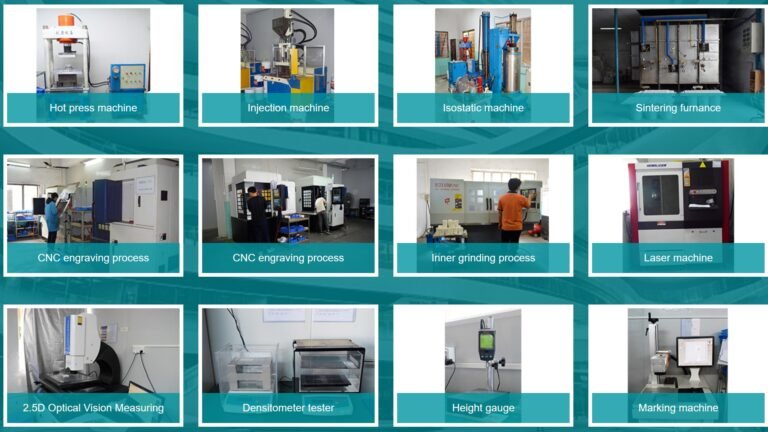
A twelve panel sheet of the forming, machining and inspection equipment
Forming, machining and inspection equipment on site.

Organised by problem

Start from what is failing

Most ceramic projects begin with a requirement, not a material. These eight pages map the requirement to the materials and the manufacturing route that answer it.

01
Wear and FrictionExtend service life where metal surfaces keep failing.
02
Electrical InsulationDielectric strength, creepage and dimensional stability.
03
High TemperatureStrength, creep and oxidation resistance above 1000 C.
04
Thermal ManagementMove heat out while staying electrically insulating.
05
Vacuum and SemiconductorOutgassing, particle control and plasma-facing parts.
06
Corrosion and ChemicalService in acids, caustics and aggressive process media.
07
Precision AlignmentDatum control, flatness and parallelism at micron level.
08
Lightweight StructuralStiffness and mass reduction replacing dense alloys.

The same chain every time

So a requirement can be traced from the problem through to the inspection plan without reading a material brochure.

01
Engineering problem
What is failing in service, or what cannot be achieved with the current material.
02
Performance requirement
The measurable parameter the new part has to deliver.
03
Possible ceramic materials
Options that meet the requirement, with the reason for each.
04
Manufacturing considerations
What the material choice costs in production and lead time.
05
Component examples
Indicative part types where the solution is applied.
06
Inspection requirements
How the result is verified, and with what documentation.
07
Submit drawing
Send the drawing and the operating conditions for review.

Two directions, one answer

If the material is already fixed by a specification, go straight to the material section. If the problem is the starting point, stay here.

  • Send the operating conditions, not only the drawing
  • State how the previous part failed if there was one
  • Identify which requirement is dominant
  • Give the temperature range and the duty cycle
  • Say whether the material is fixed or open to review
ENGINEERING NOTETwo requirements usually conflict. The review states which one the recommended material favours and what is traded away, rather than presenting a material as universally better.
Upload Drawing for Review

Whichever direction you start from, the shape still has to be produced. Parts that fit one shape are listed under the component families. Drawings that combine several, or fit none, are handled as a custom complex ceramic part. The route that turns the agreed drawing into a finished part, at prototype or production quantity, is set out under custom ceramic manufacturing.

The part and the process
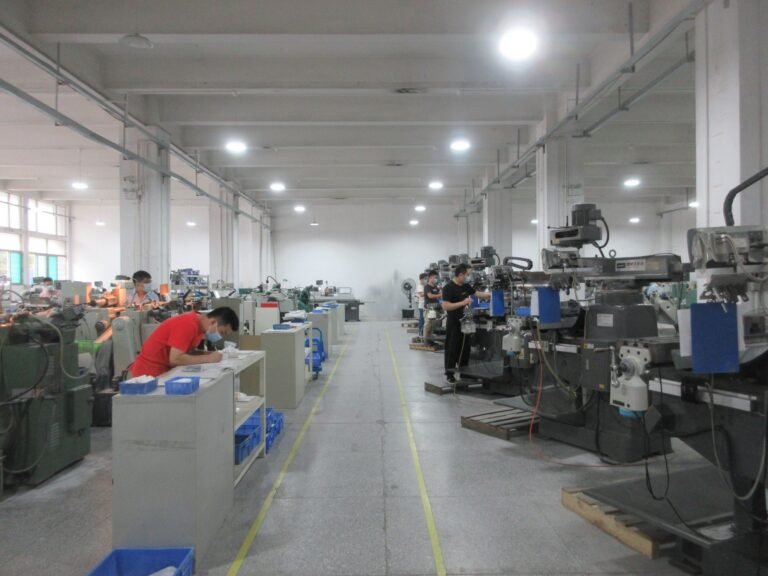
The workshop floor from one end: machine tools in rows, operators at the machines
Machine tools in rows on the workshop floor.
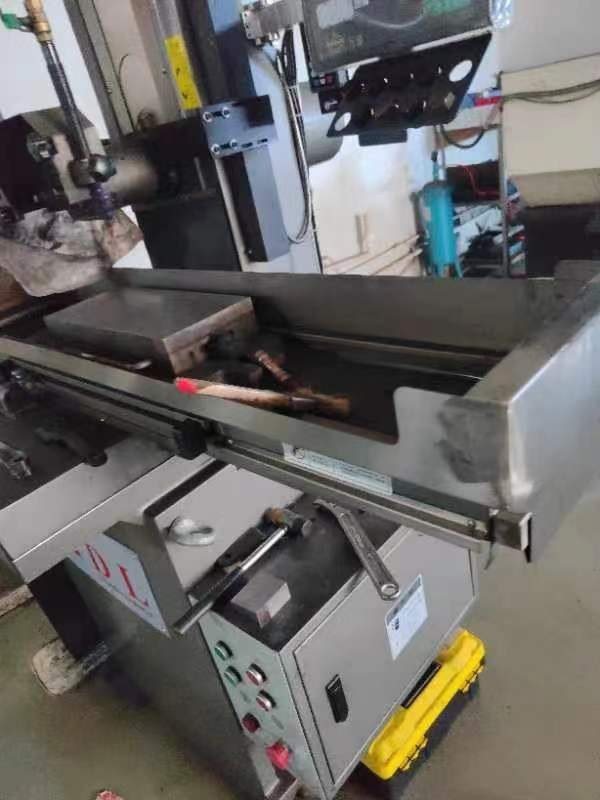
A machine tool with its work tank open, the wire head and the control panel in view
A machine tool set up on the shop floor.

Frequently asked

Describe the requirement and send the drawing. These eight pages cover the most common cases, not the full range of what is produced.
There is no single best material. Each one answers a different requirement, and the review explains which trade-off applies to your part.
Yes, if the operating conditions are described. A recommendation on conditions alone is provisional, and it is confirmed once geometry and tolerances are known.
They apply to the material and process decision. The shape is handled by the component families, and both layers link to each other.

Start from the requirement, not the material

Describe what is failing and send the drawing. The review maps the requirement to a material and a route.