
Custom ceramic manufacturing
Custom Boron Nitride Ceramic Parts Manufacturer
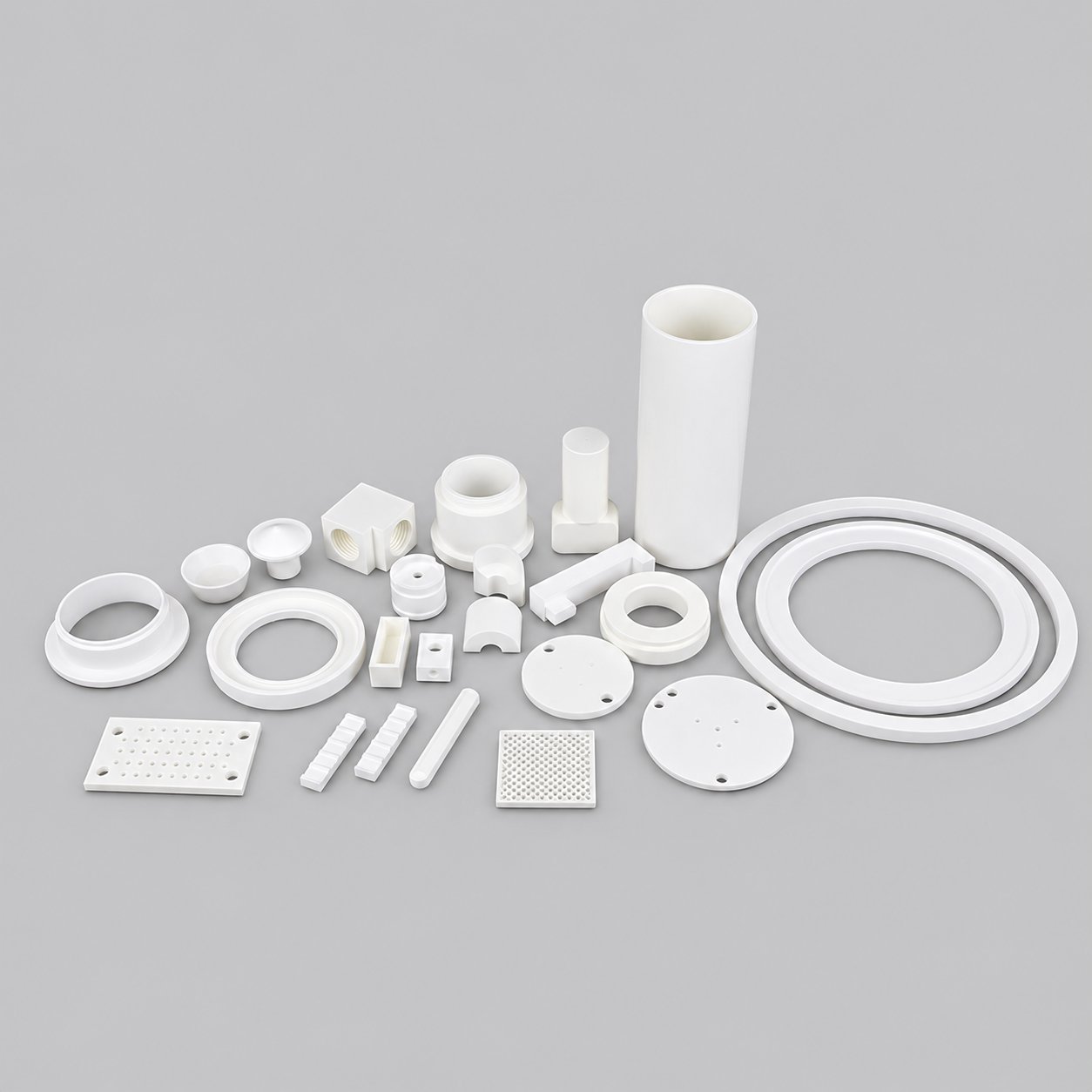
Custom BN ceramic components manufactured to customer drawings and application requirements.
- Drawing-based customization
- Machinable white grade, 99.5% purity
- Precision machining and inspection
What we manufacture
Custom Boron Nitride Components We Manufacture
Substrates, insulators, fixtures and custom geometry, each produced to the drawing on the order rather than taken from stock.
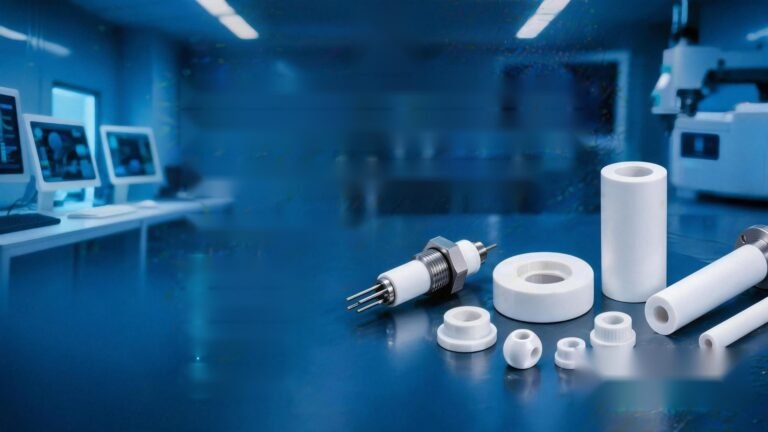
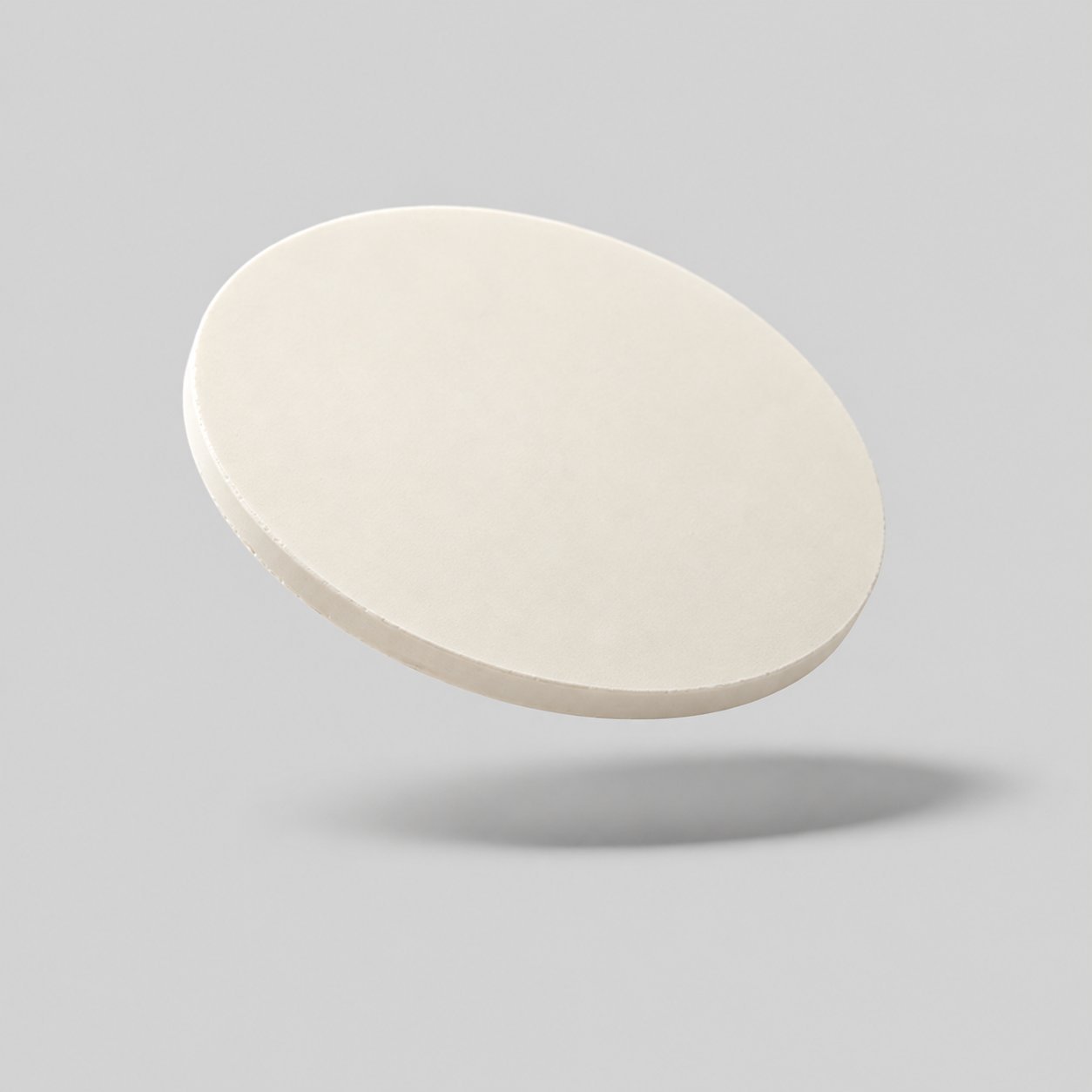
BN Plates, Discs & Rings
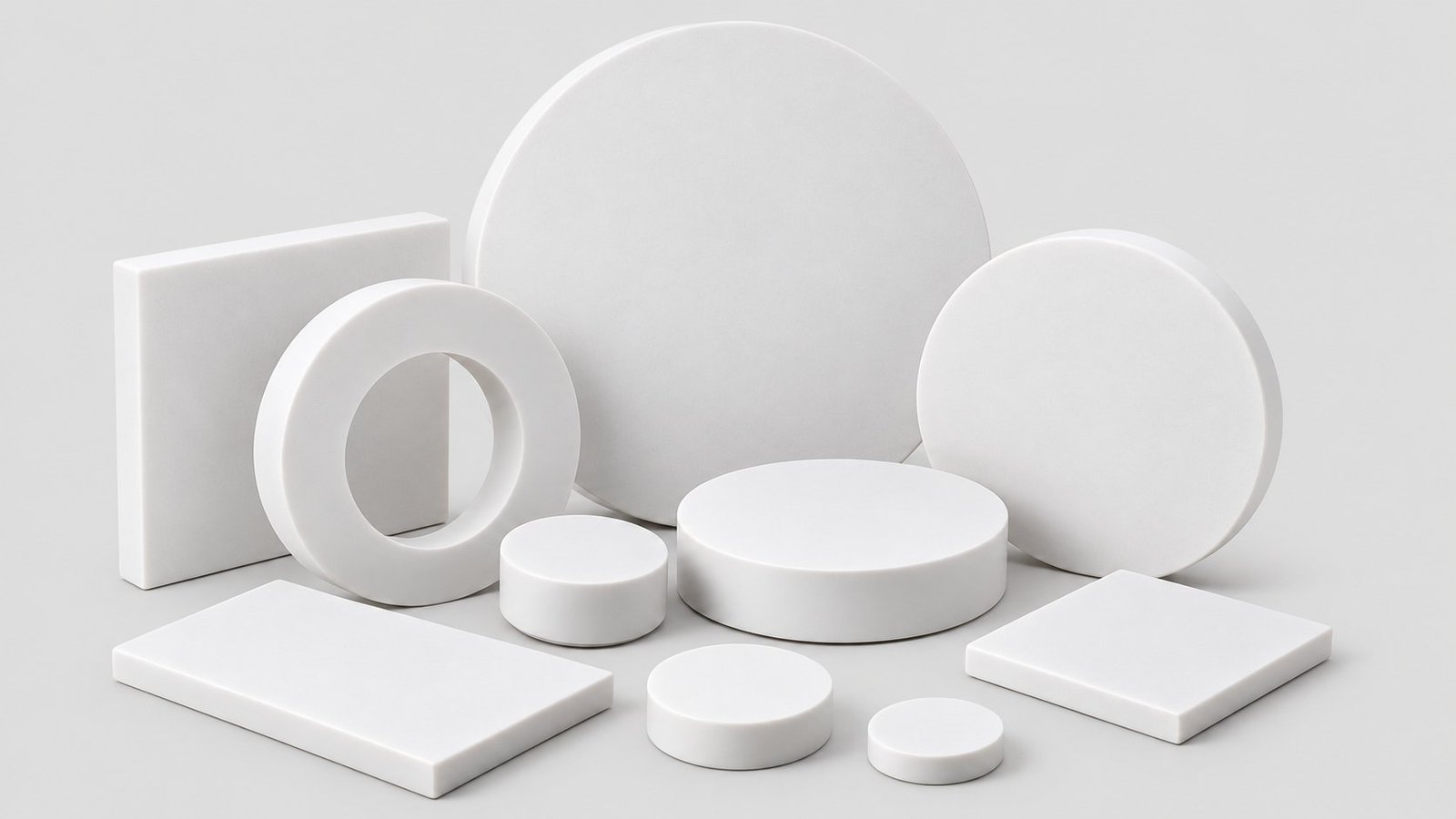
Flat and ring-form insulating parts machined to the drawing.
View details
Flat elements carry the insulation or release requirement on their faces. The machinable white grade (99.5%% purity) machines with conventional tooling in many grades, so flat geometry is reached more directly than by diamond grinding — but the softer material is easier to damage, so edge protection matters.
- Flatness and thickness measured across the part
- Compressive features preferred over fine edges
BN Rings, Flanges & Washers
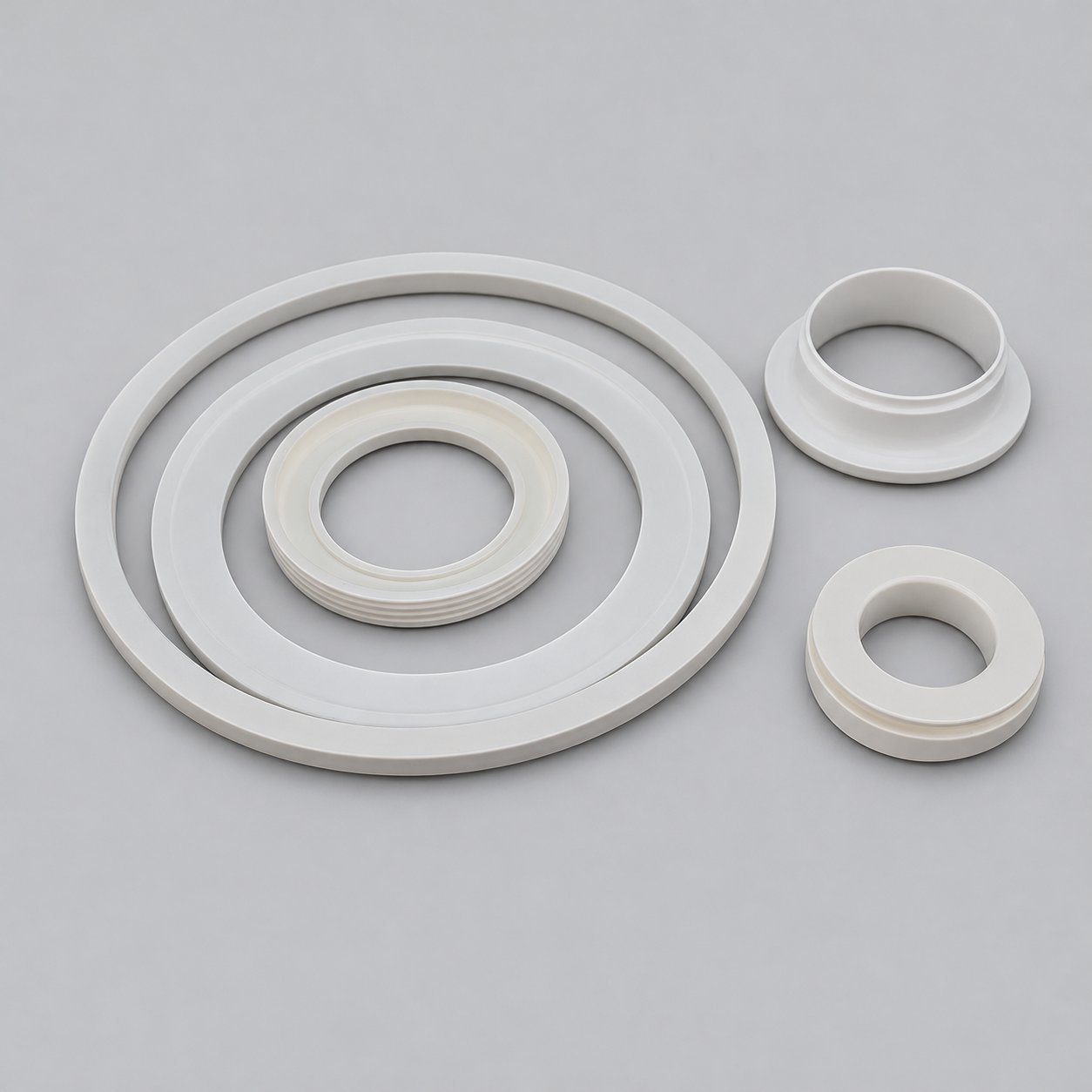
Insulating rings and flanged parts for vacuum and inert service.
View details
Rings and flanges follow the same machinable route, with bore and face geometry produced to the drawing. Maximum use temperature is 850 °C in air and 2000 °C in inert gas (published typical values for the machinable white grade).
- Bore, face and shoulder geometry to the drawing
- Application temperature depends on atmosphere
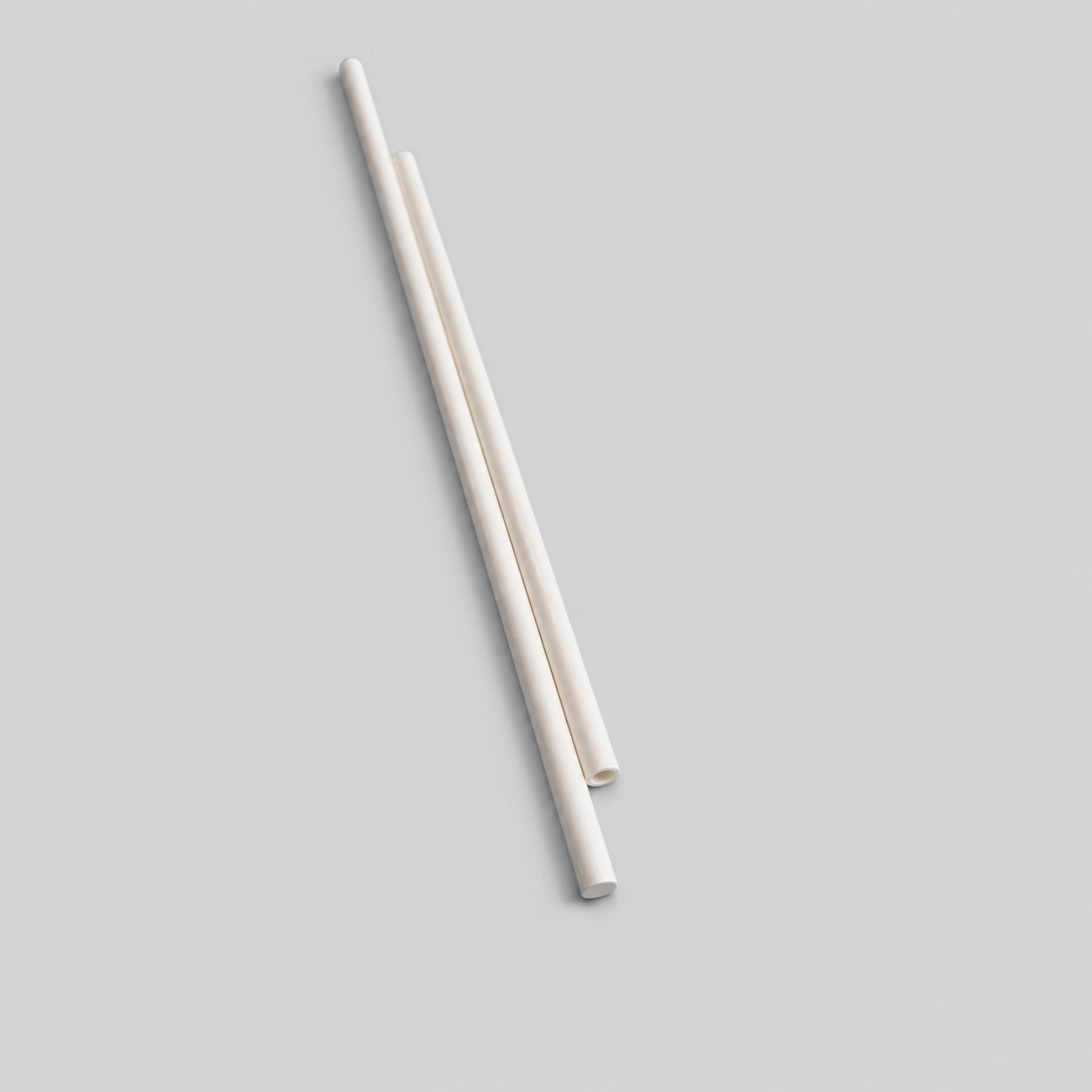
BN Tubes & Sleeves
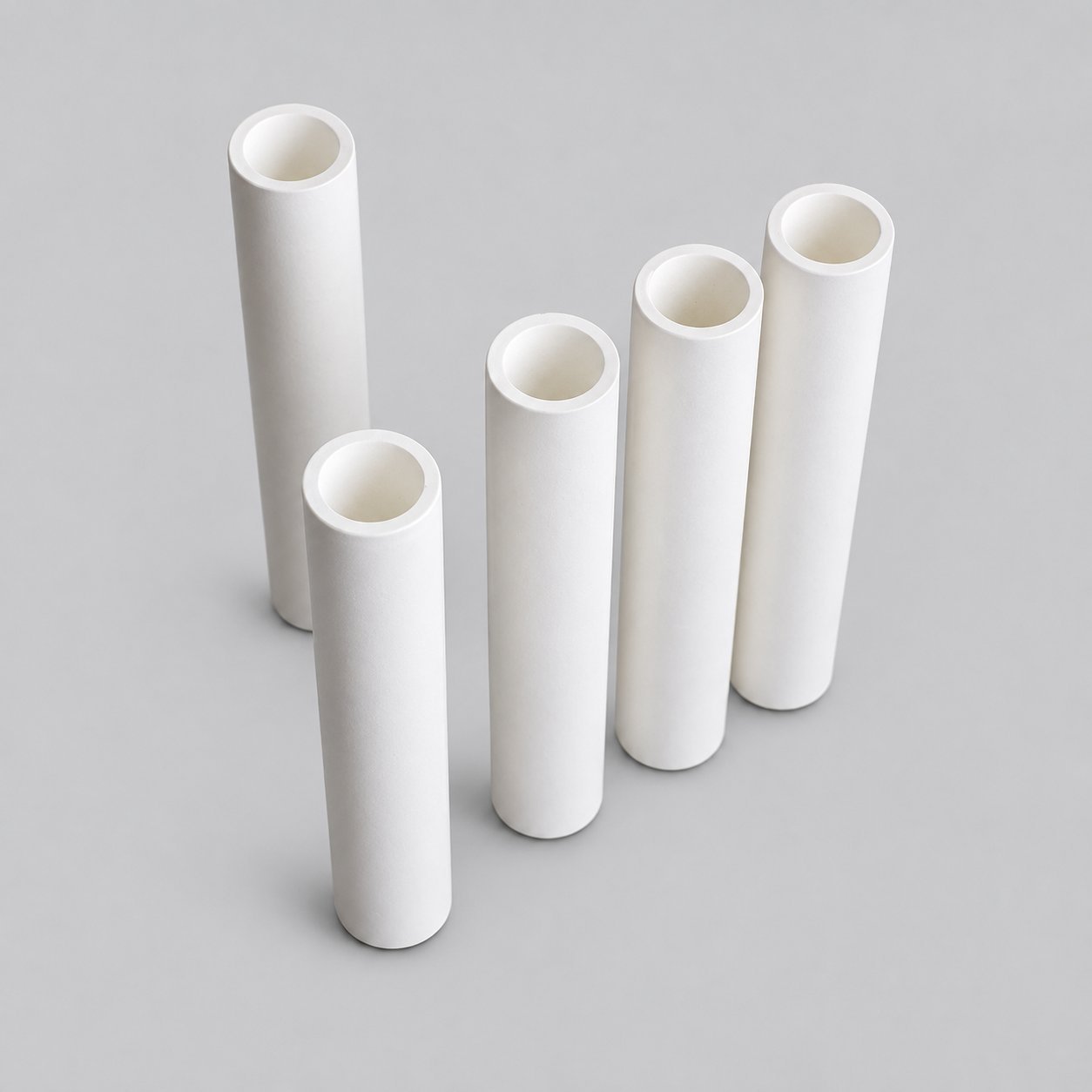
Insulating tubes and sleeves for high-temperature assemblies.
View details
Tube geometry is a natural fit for the machinable white grade: bores and outer profiles machine directly, and the material insulates electrically while conducting more heat than alumina (50–70 W/m·K published typical).
- Thin sections possible but fragile in handling
- Not a wear material: low hardness and low toughness
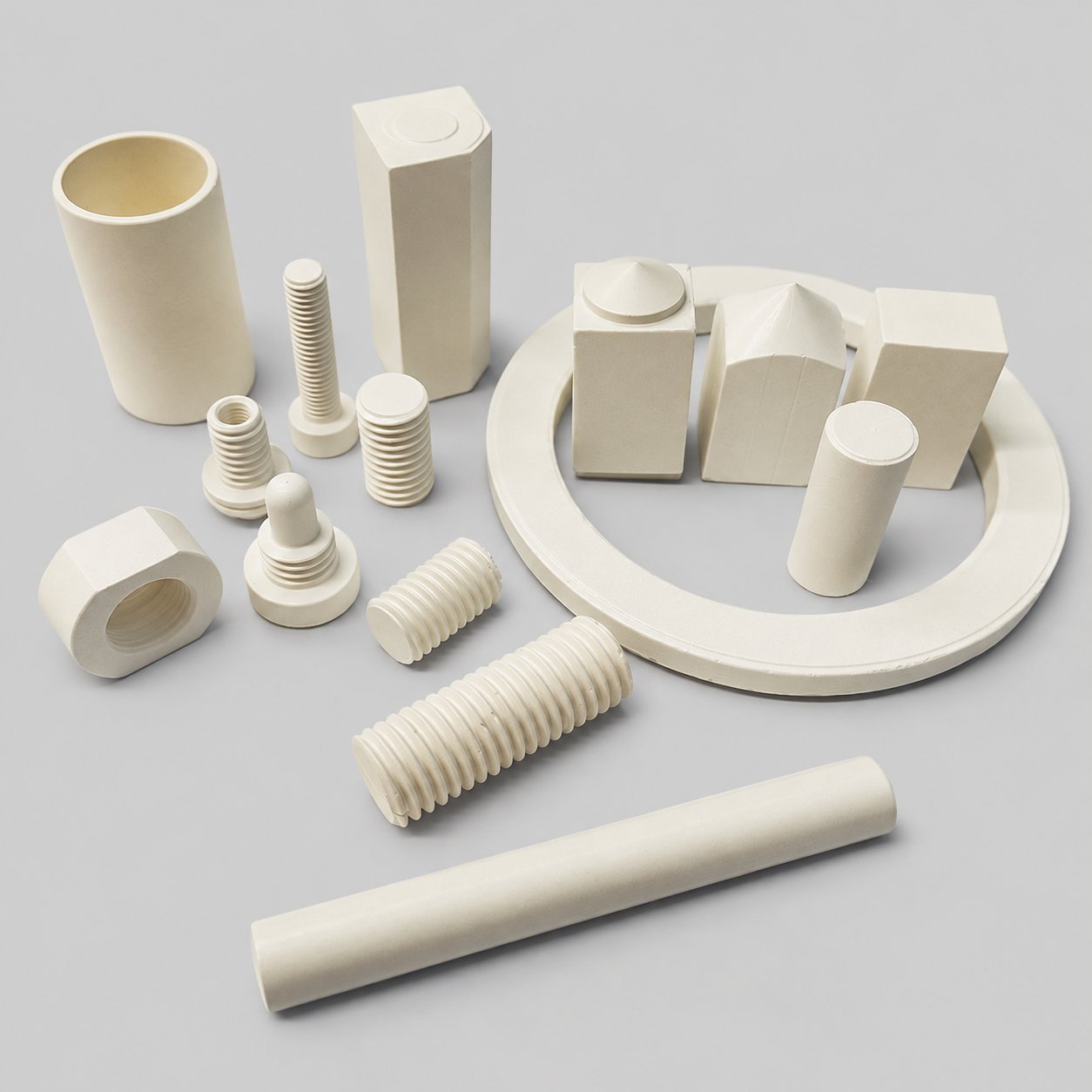
BN Threaded Fasteners & Studs
Threaded ceramic studs, nuts and fasteners for insulated assemblies.
View details
Threaded ceramic fasteners insulate an assembly while holding it together. Thread form and shoulder geometry are machined to the drawing; the softer material takes clean threads but needs careful handling after machining.
- Thread and shoulder geometry to the drawing
- Grade-dependent behaviour: manufacturing route affects properties
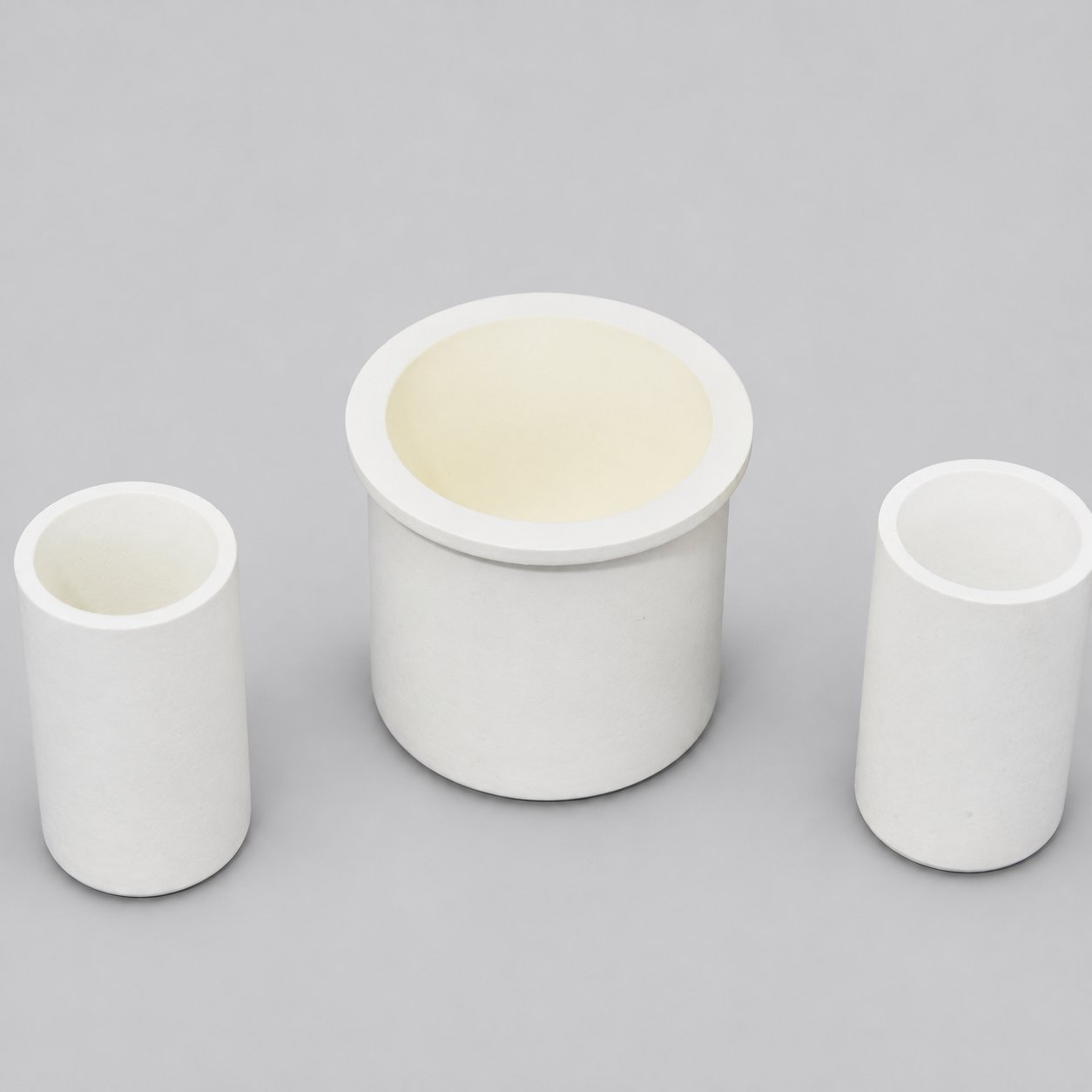
BN Crucibles & Molten-Metal Contact Parts
Non-wetting crucibles, liners and contact parts for molten metal handling.
View details
BN does not wet against molten metals and glass, which prevents build-up — the reason it is most often specified where something must not stick: crucibles, liners, release surfaces and hot processes.
- Non-wetting against molten metal and glass
- Low friction behaviour in sliding contact
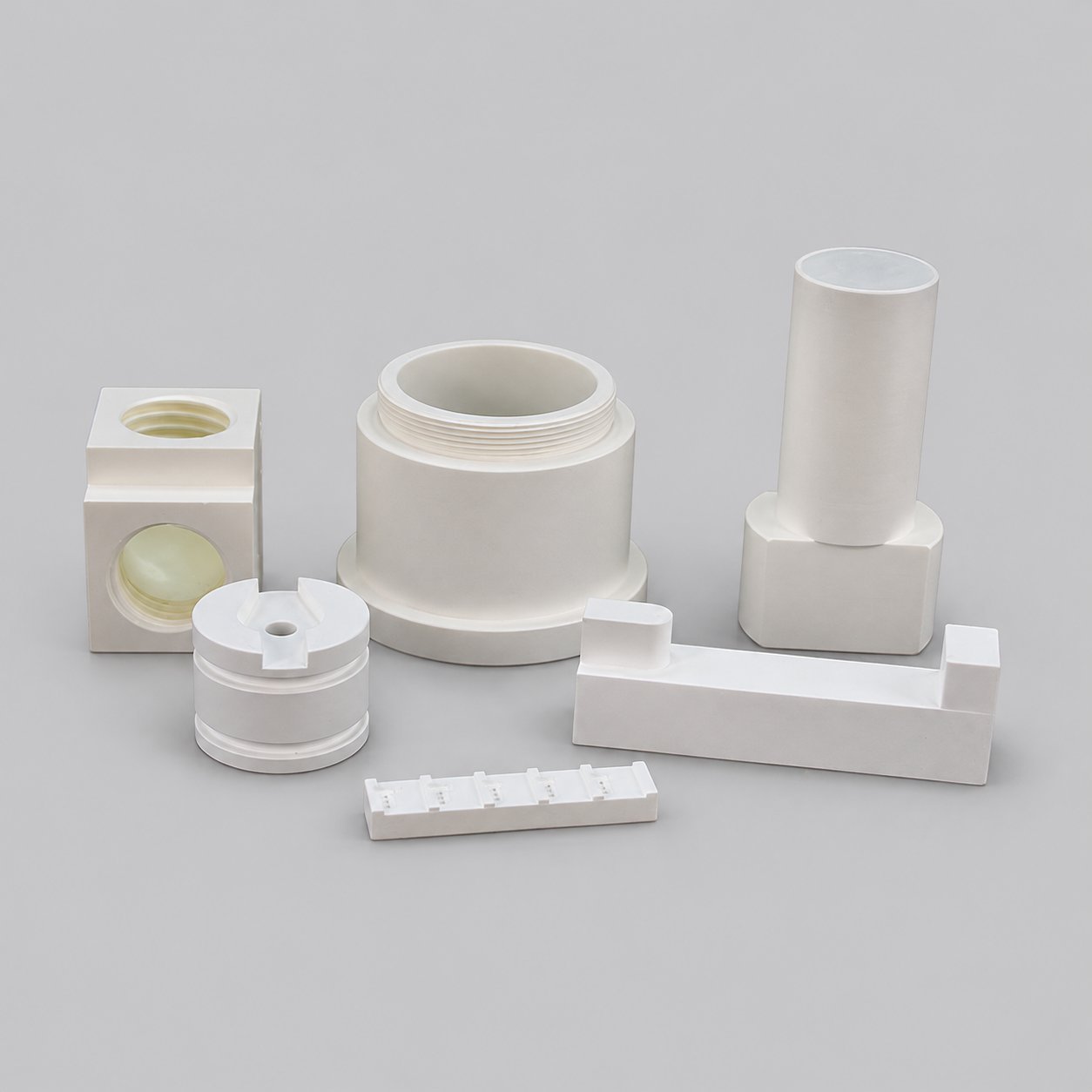
BN Custom Machined Components
Complex insulator and fixture geometry machined from the machinable white grade.
View details
Complex insulators, furnace fixtures and vacuum-furnace liners are produced to the drawing rather than taken from stock. The machinable white grade makes complex geometry the cheapest ceramic in the range to form.
- Feature-specific geometry review before quotation
- Material confirmed in writing against the supplied grade
Engineering problems we help solve
Engineering Challenges Addressed with Custom Boron Nitride
Each row links a published property to the benefit it buys.
View the engineering challenges table
| Property | Engineering benefit | Relevant application condition |
|---|---|---|
| Machinable with conventional tooling | Complex geometry at moderate cost | Prototypes and intricate insulators |
| Non-wetting against molten metal and glass | No build-up on contact surfaces | Molten metal handling and release surfaces |
| 850 °C in air, 2000 °C in inert gas | Service at temperature where the atmosphere allows | Hot-zone supports and spacers |
| Volume resistivity 10<sup>16</sup> Ω·cm | Electrical insulation at temperature | Heater and sensor supports |
How it works
From Your Drawing to Finished Boron Nitride Components
You submit the drawing; the component is made and inspected to the agreed specification.
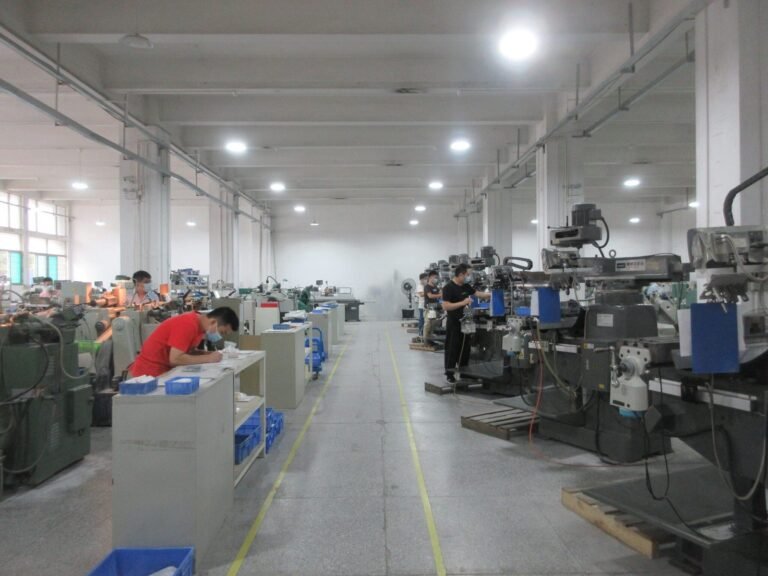
Machining and Grinding
Green machining and conventional tooling form complex geometry; this is the cheapest ceramic in the range to machine.
View details
- Route chosen per geometry and tolerance: green machining, diamond grinding, lapping or polishing
- For denser grades the route moves closer to conventional ceramic grinding
- Edge protection matters because the material is soft and easily marked
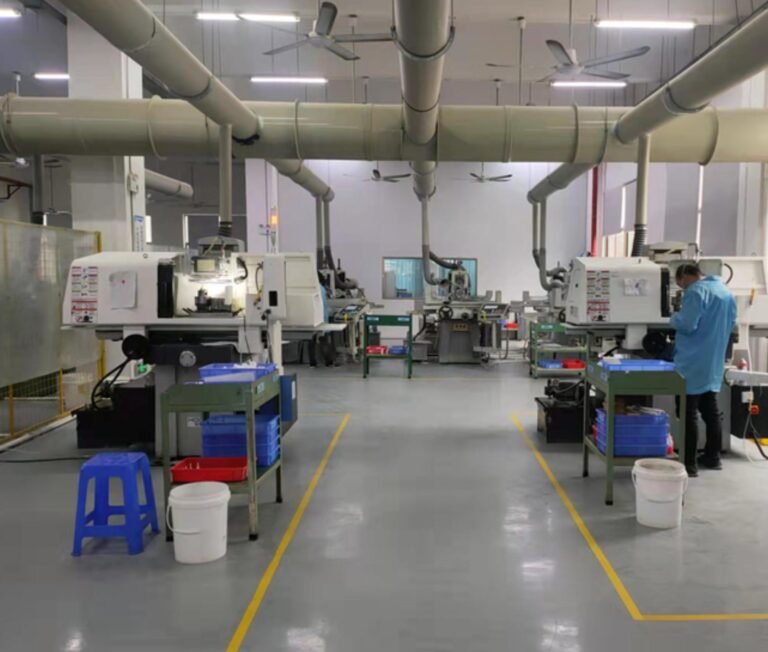
Grinding and Finishing
Faces are finished to the callout; a fine finish is achievable and generally inexpensive on this material.
View details
- Tolerance is easier to reach than in harder ceramics, but the material holds it less well when handled
- Finish is often specified for release behaviour rather than for dimensional reasons
- Surfaces are inspected for handling marks before packing
Inspection Against the Drawing
BN is soft and marks easily, so inspection is planned around handling as much as measurement.
View details
- Dimensions measured with light-contact methods; heavy clamping marks the material
- Complex geometry checked on the CMM or video system as the drawing requires
- Surface condition inspected for handling marks before packing
Precision & inspection
Confirmed Manufacturing Capability References
Feature-specific capability references quoted in this material’s context, not blanket tolerances for every material or geometry.
Achievability depends on material, part size, wall thickness, feature geometry, datum scheme and finishing process. Final capability is confirmed during drawing review.
Engineering essentials
Boron Nitride Engineering Overview
Why engineers select it, and the limitations that follow.
Technical comparison
Boron Nitride against Alumina
Each bar is the range published for that material family, taken from the comparison table in the selection centre.
Machinable white grade, 99.5%% purity
The values on this page describe the machinable white grade; hot-pressed and composite BN grades have different properties.
View technical details
- Density 1.95±0.05 g/cm³, porosity 15%% (published typical values)
- Grade-dependent behaviour: the manufacturing route affects the properties more than for other ceramics
- Final selection confirmed against the specific grade
Temperature limits depend on atmosphere
Maximum use temperature is 850 °C in air and 2000 °C in inert gas (published typical values).
View technical details
- Oxidising atmospheres cap the service temperature
- Inert gas or vacuum service extends it
- State the atmosphere on the drawing so the grade is confirmed against it
What it is not good at
Low hardness and low toughness compared with the other ceramics, so it is not a wear material.
View technical details
- Not suitable where mechanical load or abrasion is significant
- Contains no abrasive resistance, so it should not be specified where erosion is the problem
Where to go next
Related engineering pages for material selection and comparison.
What to expect on the drawing
Tolerance and finish are specified per feature. Compressive features are preferred over fine edges, which damage easily. State the service atmosphere: it sets the temperature limit.
View the full drawing and tolerance guidanceQuestions
Frequently Asked Questions About Custom Boron Nitride Parts
What is boron nitride actually used for?
Most often where something must not stick: molten metal handling, release surfaces and hot processes. It is also used for complex geometry where the cost of grinding a harder ceramic is not justified.
Why is boron nitride not used for wear parts?
Because it is soft. High hardness is what produces wear resistance, and BN is the opposite end of that scale.
Is boron nitride machinable after installation?
It is easily machined, but a ceramic part installed in equipment should not need modification. The geometry should be right before it is supplied.
Request a quote
Request a Quote for Custom BN Ceramic Parts
Send the drawing, the material grade if it is fixed, the quantity, the critical dimensions and tolerances, the required surface finish and the operating environment. The material is confirmed in writing with the quotation.
Engineering reference
Engineering Reference Library
Complete material engineering detail, retained on this page. Open a group for the full reference.
Material Fundamentals & Selection
Material overview
What is boron nitride ceramic?
Boron nitride (BN) is a compound of boron and nitrogen supplied in several commercial families; the values on this page describe the machinable white grade at 99.5% purity, and hot-pressed and composite BN grades have different properties. Published typical values for the machinable grade are a flexural strength of 22 MPa, a hardness of 4 kg/mm², 15% porosity and a maximum use temperature of 850 °C in air and 2000 °C in inert gas. It is specified for complex geometry, non-wetting contact with molten metal or glass, and high-temperature insulation where mechanical load is not carried.
When to choose Boron Nitride
Each row links a published property to the engineering benefit it buys and the condition where that benefit is the reason for the choice.
| Property | Engineering benefit | Relevant application condition |
|---|---|---|
| Machinable with conventional tooling | Complex geometry at moderate cost | Prototypes and intricate insulators |
| Non-wetting against molten metal and glass | No build-up on contact surfaces | Molten metal handling and release surfaces |
| 850 °C in air, 2000 °C in inert gas | Service at temperature where the atmosphere allows | Hot-zone supports and spacers |
| Volume resistivity 10<sup>16</sup> Ω·cm | Electrical insulation at temperature | Heater and sensor supports |
If your project looks like one of these
- Components in contact with molten metal or glass
- Release and non-wetting surfaces
- Complex geometries that would be expensive in a harder ceramic
- High-temperature parts where machinability outweighs abrasion resistance
- Insulating parts in specialised thermal paths
Where the thermal requirement rather than the mechanical one dominates is covered under ceramics for thermal management, and the furnace and hot-zone case under high temperature. Where a shape is produced by machining rather than grinding, the route is described in complex geometry.
Why engineers select it
- Machines far more easily than any other ceramic in the range, so complex geometry is cheaper
- Non-wetting against molten metals and glass, which prevents build-up
- Good thermal shock resistance
- Low friction behaviour, useful in sliding contact
- Electrically insulating, with reasonable thermal behaviour
Complete Boron Nitride Property Table
Representative published values for material selection. Where a property governs the design, state it on the drawing so it is confirmed against the supplied batch.
Material properties are representative and grade-dependent. Final material selection should be confirmed against the specific grade and application conditions. The inspection certificate for the batch supplied is the governing document for a delivered order.
| Property | Typical value |
|---|---|
| Colour | White |
| BN purity (%) | 99.5 |
| Density (g/cm³) | 1.95 ± 0.05 |
| Hardness (kg/mm²) | 4 |
| Porosity (%) | 15 |
| Flexural strength, 20 °C (MPa) | 22 |
| Maximum use temperature, in air (°C) | 850 |
| Maximum use temperature, in inert gas (°C) | 2000 |
| Thermal conductivity (W/m·K) | 50 – 70 |
| Thermal expansion coefficient, 25-1900 °C (×10⁻⁶/K) | 1 – 1.2 |
| Volume resistivity, RT (Ω·cm) | 1016 |
Boron Nitride against Alumina
Flexural strength, MPa
- Alumina (Al2O3), 95-99.7%300 – 380
- Boron nitride (BN)22
A longer bar carries more load before it breaks. A range covers the grades supplied in that family rather than one nominal figure.
Source: Flexural strength (MPa)
Thermal conductivity, W/m·K
- Alumina (Al2O3), 95-99.7%20 – 32
- Boron nitride (BN)50 – 70
A longer bar moves heat away faster. Conducting heat while still insulating electrically is the pairing power electronics needs, and it is why this property is read next to strength.
Source: Thermal conductivity (W/m·K)
Material engineering reference: Boron Nitride (BN) for Custom Precision Components
Applications & Alternative Ceramics
Boron Nitride in service
The sectors below are the ones that specify this material, with the component that carries the requirement and the material property that earns the place. Each entry opens the sector page for the full component list.
A sector that is not listed is not a sector that is refused. It means the material has not been the obvious answer there, and the review starts from the operating condition instead.
What to compare it against
These are the alternatives that most often come up against Boron Nitride, with the reason each might be preferred.
What is produced in this material
What is produced in this material
Molten metal handling components
Release and non-stick surfaces in hot processes
Complex insulator geometry
High-temperature spacers and liners
Specialised thermal path components
Molten metal and glass contact parts
High-temperature insulating liners in inert gas
Ceramic fixtures
Manufacturing & Design Considerations
What the material costs in production
The material decision and the manufacturing route are the same decision seen from two ends. Green machining, diamond grinding, lapping and polishing each have a place, and the route depends on the geometry and the tolerance.
- Can be machined with conventional tooling in many grades, which makes it the cheapest ceramic to form into complex shapes
- Tolerance is reached more directly than by diamond grinding, but the softer material is easier to damage
- Edge protection matters because the material is soft and easily marked
- For denser grades the route moves closer to conventional ceramic grinding
Rings, discs and plates
Custom machined parts
What to expect on the drawing
Tolerance and finish are specified per feature. An overall callout on the whole part is the most common cause of an unnecessarily expensive quotation.
Tolerance considerations
- Tolerance is easier to reach than in harder ceramics, but the material holds it less well when handled
- Compressive features are preferred over fine edges, which damage easily
- Thin sections are possible but fragile in handling rather than in machining
Surface finish considerations
- A fine finish is achievable and generally inexpensive
- Finish is often specified for release behaviour rather than for dimensional reasons
- Surface condition is protected in packing, since the material marks easily
Inspection & Technical Documentation
How critical features are verified
Boron nitride is soft and marks easily, so inspection is planned around handling as much as measurement.
- Dimensions are measured with light-contact methods; heavy clamping marks the material
- Complex machined geometry is checked on the CMM or video system as the drawing requires
- Surface condition is inspected for handling marks before packing, since the material marks easily
- Critical features are measured with the same equipment and methods agreed at drawing review
The equipment behind these methods is listed on the inspection and metrology page.
Technical documents
No file on this page is offered as a download, because each document is generated against the grade and the drawing on the order. What can be issued, and when, is listed here instead.
| Document | Applies to | Format | Issued |
|---|---|---|---|
| Material grade certificate | The grade the part is produced from | With the shipment | |
| Dimensional inspection record | The dimensions called out on the drawing | With the shipment | |
| Certificate of conformity | The finished part, against the drawing | With the shipment | |
| First article inspection report | The first part produced to a new drawing | On request; method agreed at quotation | |
| Material property data for the selected grade | The grade in question | On request, or from the material manufacturer |
A document that is not on this list is not refused by default; it is quoted once the method behind it has been confirmed. State what your incoming inspection will check, and the document set is agreed before the order is placed.