
Engineering solution
High Temperature: Ceramic Components for the Requirement
Strength, creep resistance and dimensional stability above the range where metals soften, oxidise or lose tolerance.
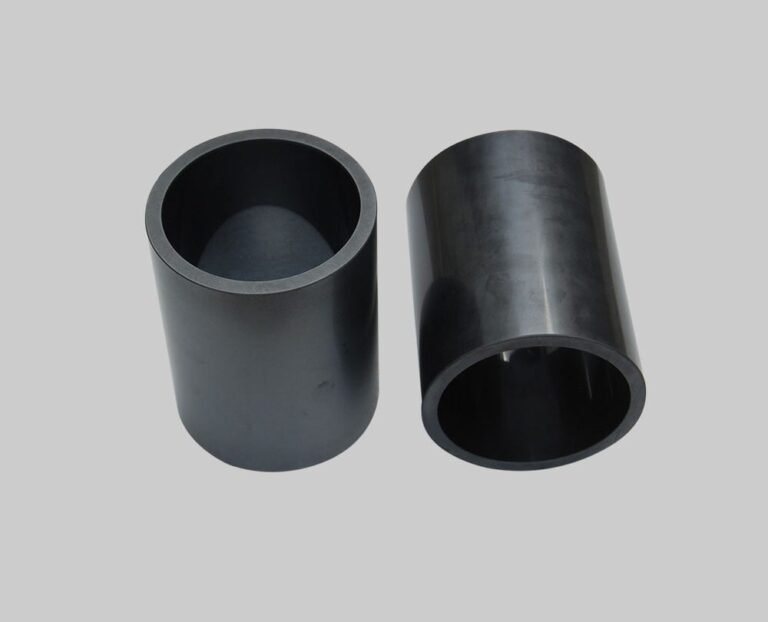
The engineering problem
What is actually failing
A component sits in a furnace, a kiln, an exhaust path or a high-temperature process, and metal has either deformed, oxidised away or lost the dimensional control the process needs.
What the part has to deliver
These are the parameters that decide the material. Not all of them matter equally, which is why the dominant one is identified first.
| Requirement | What it governs |
|---|---|
| Service temperature | Continuous and peak, stated separately |
| Thermal cycling | Number of cycles and the rate of change |
| Load at temperature | Creep becomes the controlling mechanism above a material-specific threshold |
| Atmosphere | Oxidising, reducing, vacuum or inert |
| Chemical contact | Slag, molten metal, salt or process gas |
Options and the reason behind each
Where two requirements conflict, the trade-off is explained before quoting rather than after.
| Material | Why it is chosen here |
|---|---|
| Alumina (Al2O3) | The general high-temperature choice; retains strength and insulation to elevated temperatures |
| Silicon carbide (SiC) | Highest temperature capability with excellent thermal shock resistance |
| Silicon nitride (Si3N4) | Thermal cycling under mechanical load, where SiC would be too brittle |
| Boron nitride (BN) | Non-wetting contact with molten metal and easy machining into complex shapes |
| Zirconia (ZrO2) | Where toughness at temperature matters more than thermal shock resistance |
What the choice costs in production
These are the constraints that turn a material decision into a manufacturing route, and sometimes into a design change.
- Thermal shock resistance depends on section thickness, so a thinner wall performs better but is harder to machine and handle
- Sharp corners concentrate thermal stress: radii are a functional requirement here, not a finishing choice
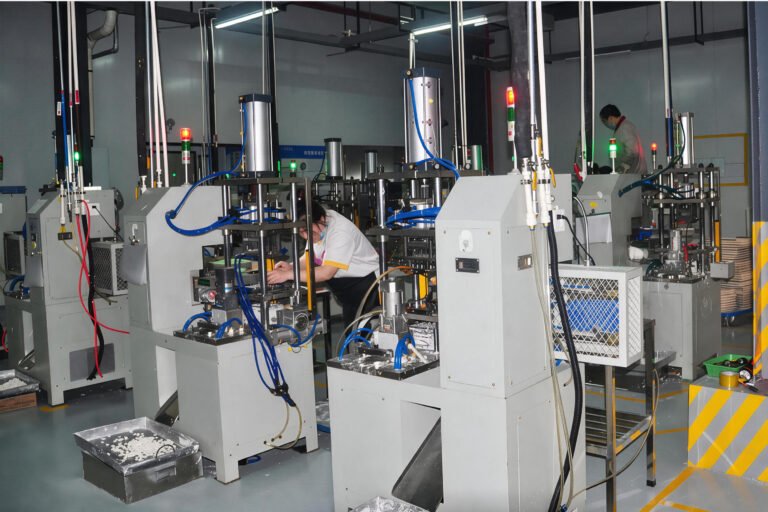
- Firing shrinkage is accounted for in near-net shapes, and the final tolerance comes from after-firing grinding
- Support during firing affects distortion, so part orientation is part of the process design
- Materials that react in service may need a defined surface condition or cleaning step
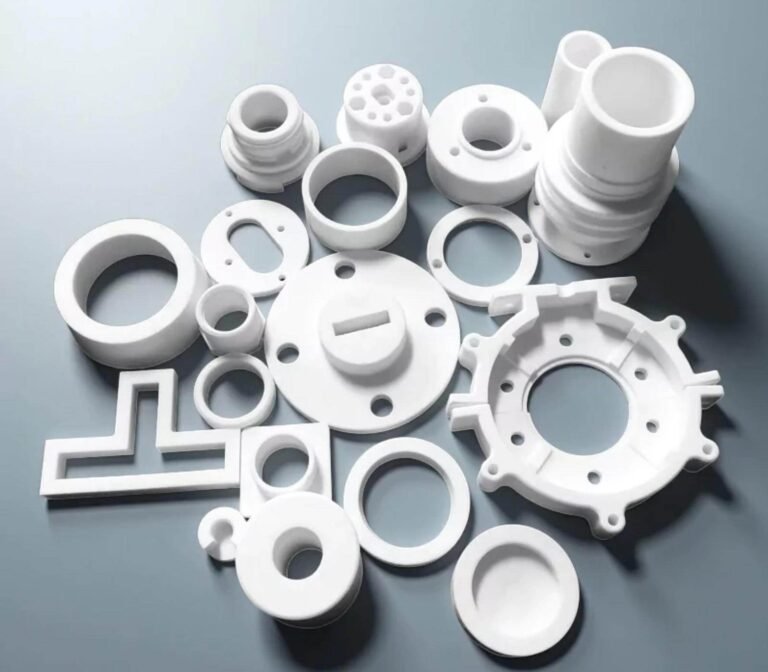
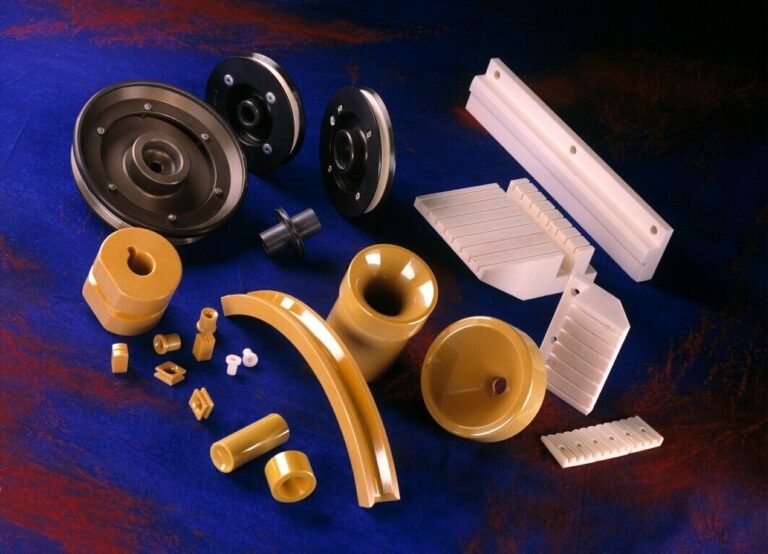
Capabilities depend on material, geometry, feature size and finishing requirements. Critical dimensions are reviewed against the drawing.
Where this solution is applied
Indicative component types. No customer names are published, and no application is described that we have not made.
Furnace setters, supports and kiln furniture
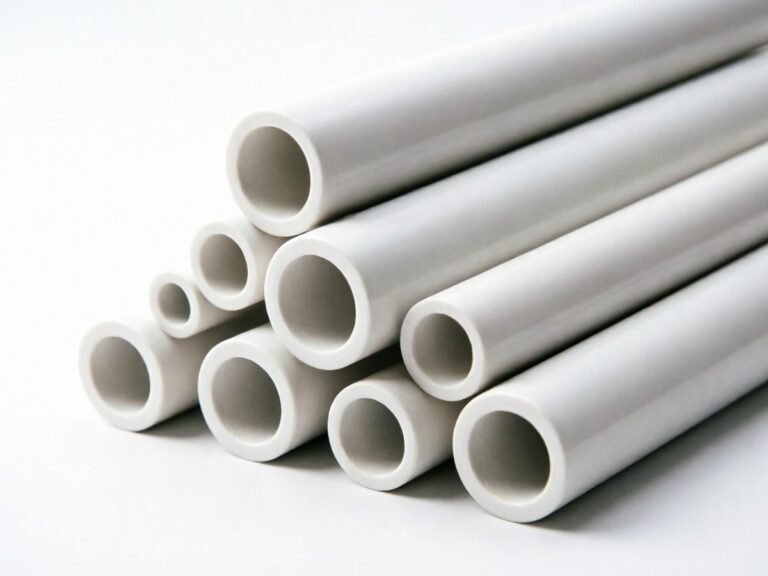
Thermocouple and sensor protection tubes
Molten metal contact parts and flow components
Burner and combustion hardware
High-temperature insulating sleeves and standoffs
How the result is verified
The inspection plan is agreed before machining, since ceramic cannot be reworked the way metal can.
- Dimensional verification after firing, since firing is where distortion occurs
- Flatness and straightness for structural high-temperature parts
- Visual inspection for cracks, which propagate under thermal cycling
- Wall thickness uniformity on tubes and protection sheaths
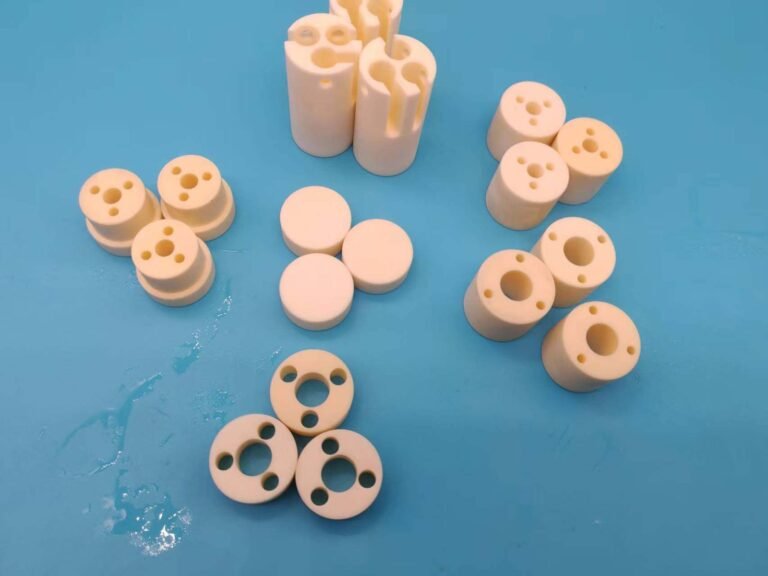
The part and the process
Frequently asked
Describe the problem and send the drawing
The requirement decides the material. Give the conditions and the review will state which material and route apply, and why.