
Custom ceramic manufacturing
Custom Zirconia Ceramic Parts Manufacturer
The toughest material in this range. Chosen when the part has to resist impact, high face load or wear without chipping, and where alumina would be too brittle.
- Drawing-based customization — every part produced to your drawing, not stock
- Prototype-to-production — one-off evaluation parts through repeat production
- Precision machining & inspection — diamond grinding and documented verification
What we manufacture
Custom Zirconia Components We Manufacture
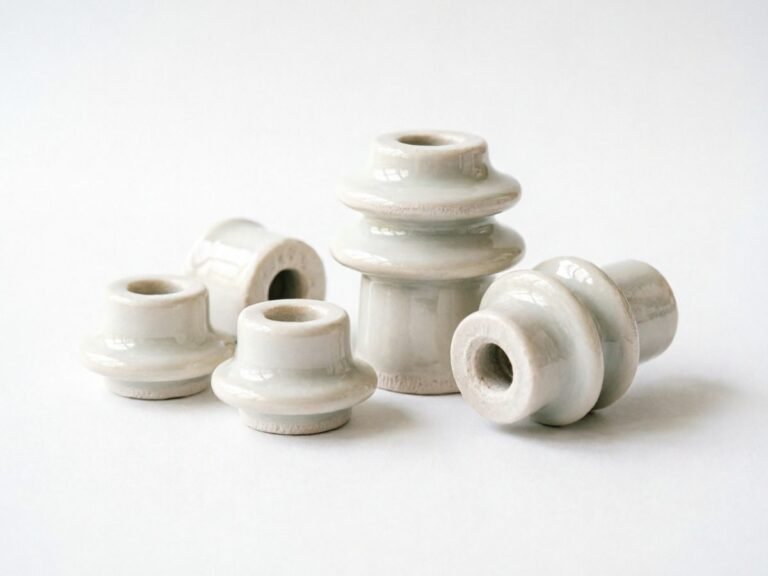
Precision zirconia components manufactured to customer drawings, with geometry and critical features evaluated against application requirements.
Seal Rings & Mating Rings
Sealing faces and mating rings for pumps, valves and rotary service.
- Flat, ground sealing faces
- Bore and OD geometry to the drawing
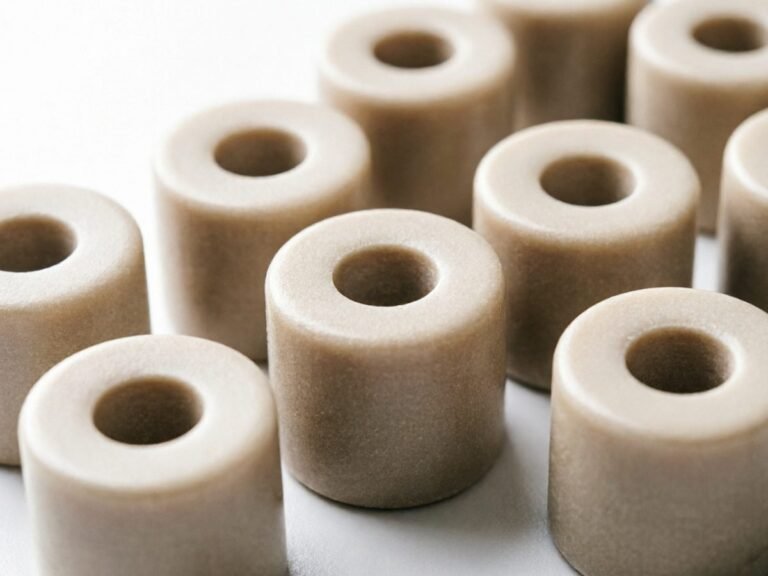
Ferrules & Precision Barrels
Small precision bores for fibre, fluid and metering service.
- Concentric bores held to the drawing
- Ground end faces
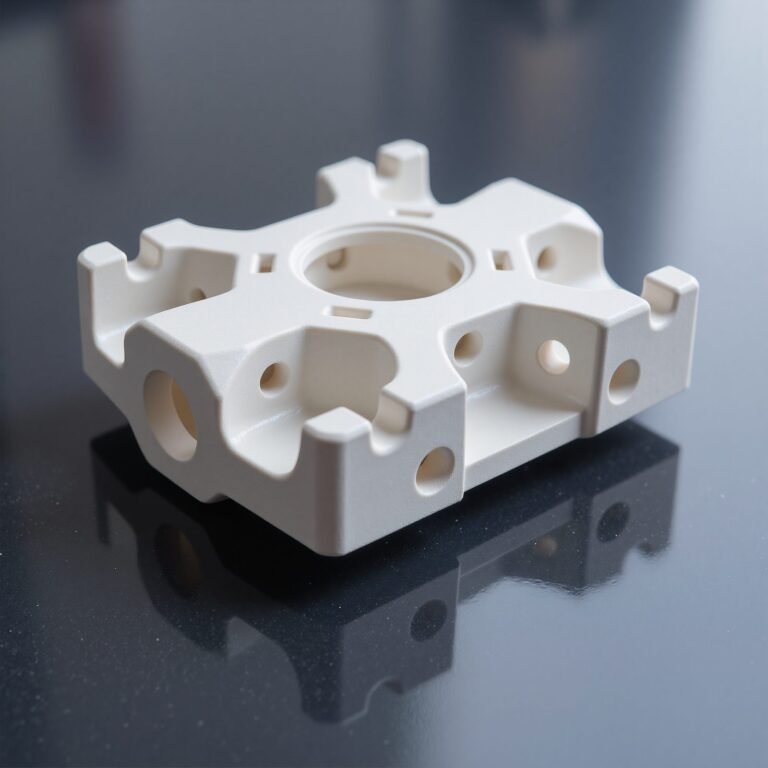
Precision Machined Parts
Non-standard geometry from your drawing, held to datum.
- Compound datums held
- One-off to production quantities
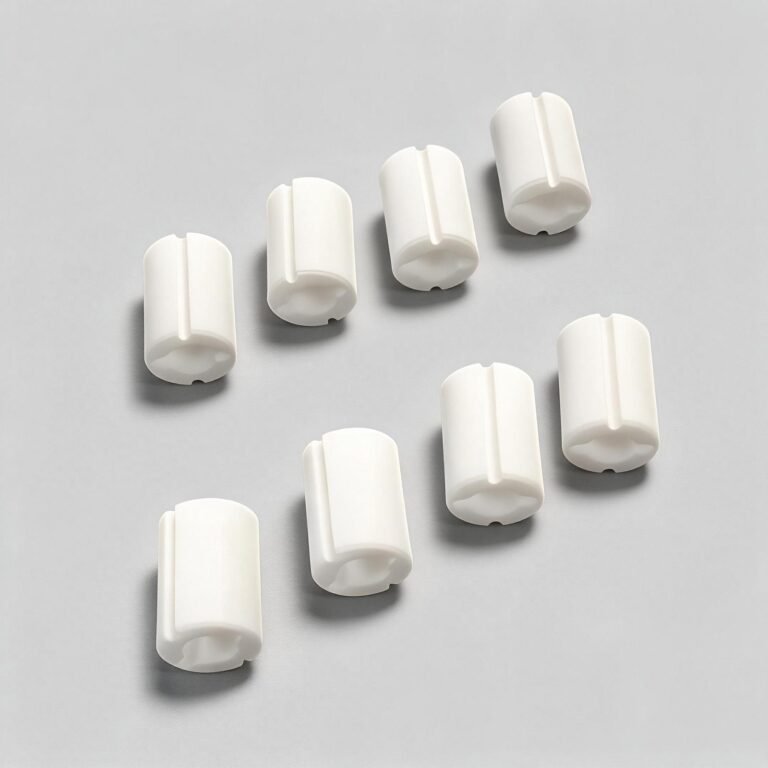
Plungers, Pins & Shaft Rods
Small turned parts held on diameter and length.
- Ground diameter and length
- Step and groove geometry
Cutting Blades & Wear Inserts
Edge tools and wear surfaces for tooling and die duty.
- Ground cutting edges
- Wear surfaces to the drawing
Analytical & Medical Hardware
Precision components for analytical and medical instruments.
- Feature-specific geometry review
- Material confirmed in writing with quotation
Engineering problems we help solve
Engineering Challenges Addressed with Custom Zirconia
| Property | Engineering benefit | Relevant application condition |
|---|---|---|
| Fracture toughness 6 to 9 MPa√m | Resists impact and chipping | Intermittent shock and high face load |
| Flexural strength 500 to 900 MPa | Thinner sections carry the same load | Compact components under mechanical load |
| Very fine lapped finish | Sealing and mating faces run true | Seal rings, plungers and metering pins |
How it works
From Your Drawing to Finished Zirconia Components
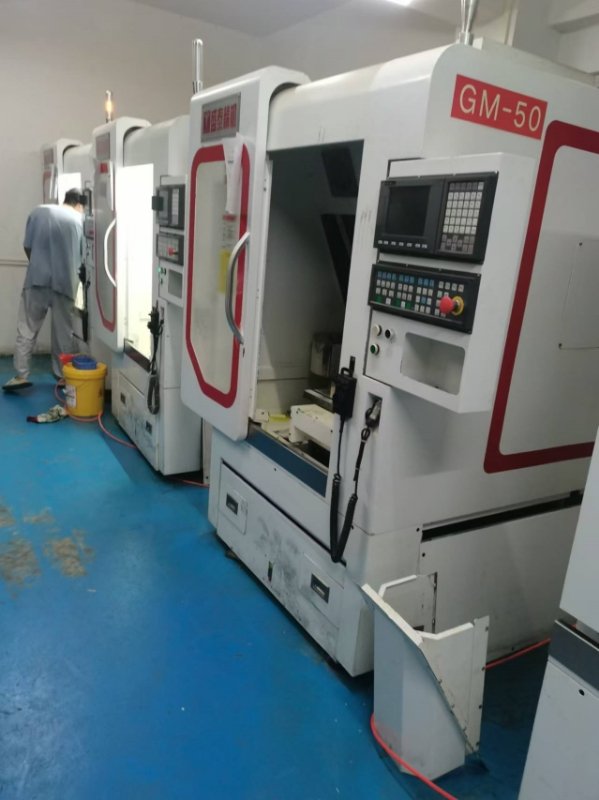
You submit the drawing. We evaluate manufacturability. The component is made and inspected to the agreed specification.
Precision & inspection
Precision Machining and Inspection for Zirconia Parts
Confirmed capability figures
The figures below are this shop’s confirmed manufacturing capability, quoted in this material’s context. They are feature-specific capability references, not blanket tolerances for every material or geometry.
These values are feature-specific capability references, not blanket tolerances for every material or geometry. Achievability depends on material, part size, wall thickness, feature geometry, datum scheme and finishing process. Final capability is confirmed during drawing review.
The machining route behind these figures is described under precision grinding, and the equipment that verifies them under inspection and metrology.
Engineering essentials
Zirconia Grades & Engineering Essentials
Material Grade Selection
Representative published values for material selection. Where a property governs the design, state it on the drawing so it is confirmed against the supplied batch.
Material properties are representative and grade-dependent. Final material selection should be confirmed against the specific grade and application conditions. The inspection certificate for the batch supplied is the governing document for a delivered order.
These are grade identifiers, not universal performance promises. Material properties depend on grade and supplier/batch; final selection is confirmed against real application conditions and the supplier’s data sheet.
View Full Engineering PropertiesZirconia against Alumina
Strength in bending and heat removal separate the range faster than any other pair of properties. Each bar is the range published for that material family, taken from the same comparison table that appears in the selection centre.
Flexural strength, MPa — Alumina (Al2O3), 95-99.7%: 300 – 380 · Zirconia (ZrO2): 500 – 900
A longer bar carries more load before it breaks. A range covers the grades supplied in that family rather than one nominal figure.
Source: Flexural strength (MPa)
Thermal conductivity, W/m·K — Alumina (Al2O3), 95-99.7%: 20 – 32 · Zirconia (ZrO2): 2.5 – 3
A longer bar moves heat away faster. Conducting heat while still insulating electrically is the pairing power electronics needs, and it is why this property is read next to strength.
Source: Thermal conductivity (W/m·K)
What it is not good at
Stating this up front prevents a material being selected for the one thing it cannot do.
- Not suitable for sustained high temperature: the toughening mechanism is temperature sensitive
- Lower hardness than alumina and silicon carbide, so pure abrasion resistance is not its strength
- Grinding requires control of the surface condition, because the material depends on a phase transformation for its toughness
- Higher density and higher cost than alumina
Questions
Frequently Asked Questions About Custom Zirconia Parts
Why is zirconia tougher than alumina?
Its toughening mechanism absorbs energy at the crack tip, which is what makes it resist chipping. That mechanism is also the reason it is not a high-temperature material, since it depends on a phase transformation.
Can zirconia be used in a medical device?
Zirconia is widely used for medical hardware. The part is supplied to your drawing and material specification; the regulatory qualification of the device remains with you.
Is zirconia more expensive than alumina?
Both the material and the processing are higher. It is justified where alumina would chip, because a part that survives is cheaper than one that is replaced.
Request a quote
Request a Quote for Custom Zirconia Ceramic Parts
Send the drawing, the material grade if it is fixed, the quantity, the critical dimensions and tolerances, the required surface finish and the operating environment. The material is confirmed in writing with the quotation.
Engineering reference
Engineering Reference Library
Complete material engineering detail, retained on this page. Open a group for the full reference.
Material Fundamentals & Selection
Material overview
What is zirconia ceramic?
Zirconia (ZrO2) is an oxide ceramic of zirconium and oxygen, stabilised with yttria or magnesia so it can be sintered into a dense technical ceramic and then diamond ground. Yttria-stabilised grades, including the 3Y-TZP family, and magnesia-stabilised grades differ in strength, toughness and temperature behaviour. Published typical values across the range are a density of 5.6 to 6 g/cm³, a flexural strength of 500 to 900 MPa and a fracture toughness of 6 to 9 MPa√m. It is specified where a part has to resist impact, high face load or wear without chipping.
When to choose Zirconia
Each row links a published property to the engineering benefit it buys and the condition where that benefit is the reason for the choice.
| Property | Engineering benefit | Relevant application condition |
|---|---|---|
| Fracture toughness 6 to 9 MPa√m | Resists impact and chipping | Intermittent shock and high face load |
| Flexural strength 500 to 900 MPa | Thinner sections carry the same load | Compact components under mechanical load |
| Very fine lapped finish | Sealing and mating faces run true | Seal rings, plungers and metering pins |
If your project looks like one of these
- Plungers, shafts and pins under mechanical load
- Seal rings and mating faces subject to shock
- Cutting and slitting components that need a fine edge
- Medical and analytical hardware, where specific grades are selected for biocompatibility
- Wear parts that also see intermittent impact
The shapes zirconia is most often ordered in are grouped under rings and seal rings and shafts and pins. Where a seal also has to survive rapid temperature cycling, the case for silicon nitride is set out on its page, and the general material trade-off is laid out in the material selection centre.
Why engineers select it
Each of these is a reason to choose it. The limitations that follow are the reason not to.
- Highest fracture toughness among the materials compared on this site, so it resists chipping and impact that would destroy an alumina part
- High strength allows thinner sections for the same load
- Very good wear resistance when paired with a suitable counterface
- Very fine surface finish can be produced by lapping and polishing
- Specific zirconia grades are used in medical and laboratory hardware; device-level qualification remains with the customer
Complete Zirconia Grade & Property Matrix
| Property | ZrO2-Y2O3 94.4% white | ZrO2-Y2O3 94% black | ZrO2-Y2O3 94% blue | ZrO2-MgO 94.4% yellow |
|---|---|---|---|---|
| Colour | White | Black | Blue | Yellow |
| Density (g/cm³) | 6 | 5.6 | 6 | 5.7 |
| Flexural strength, 20 °C (MPa) | 800 | 710 | 900 | 500 |
| Compressive strength, 20 °C (MPa) | 2000 | 2000 | 2000 | 2500 |
| Elastic modulus, 20 °C (GPa) | 200 | 210 | 220 | 250 |
| Fracture toughness, 20 °C (MPa√m) | 9 | 8 | 8 | 6 |
| Vickers hardness HV1 (kg/mm²) | 1175 | 1100 | 1220 | 1100 |
| Thermal expansion coefficient (×10⁻⁶/K) | 9.6 | 9.5 | 10 | 10 |
| Thermal conductivity (W/m·K) | 2.5 | 3 | 3 | 3 |
| Thermal shock resistance (ΔT, °C) | 250 | 300 | 300 | 450 |
| Maximum use temperature, in air (°C) | 800 | 800 | 800 | 2100 |
| Volume resistivity, 20 °C (Ω·cm) | 1014 | 1010 | 1014 | 1014 |
| Dielectric strength (kV/mm) | 13 | 13 | 13 | 13 |
| Dielectric constant, 1 MHz, RT | 28 | 28 | 28 | 28 |
| Dielectric loss tan δ, 1 MHz, 20 °C | 17×10-4 | 17×10-4 | 17×10-4 | 17×10-4 |
Grade-independent ranges
| Property | Value across the range |
|---|---|
| Poisson’s ratio, 20 °C | 0.3 (Y2O3-stabilised grades) |
| Rockwell hardness HRA | 85 – 90 |
| Rockwell hardness R45N | 75 – 78 |
| Specific heat (J/g·K) | 0.46 – 0.48 |
Material engineering reference: Zirconia (ZrO2) for Custom Precision Components
Applications & Alternative Ceramics
Zirconia in service
The sectors below are the ones that specify this material, with the component that carries the requirement and the material property that earns the place. Each entry opens the sector page for the full component list.
A sector that is not listed is not a sector that is refused. It means the material has not been the obvious answer there, and the review starts from the operating condition instead.
What to compare it against
These are the alternatives that most often come up against Zirconia, with the reason each might be preferred.
What is produced in this material
What is produced in this material
Seal rings and mating rings
Plungers and metering pins
Slitting and cutting components
Ferrules and small precision barrels
Analytical and medical hardware components
Cutting blades, industrial knives and shear edges
Ceramic shaft rods and plungers
Wear-resistant inserts for tooling and dies
High-density flat ceramic cards
Manufacturing & Design Considerations
What the material costs in production
The material decision and the manufacturing route are the same decision seen from two ends. Green machining, diamond grinding, lapping and polishing each have a place, and the route depends on the geometry and the tolerance.
- Grinding parameters have to be selected for zirconia specifically; a generic ceramic sequence can degrade the surface layer
- The surface state matters more than for alumina, since the toughening mechanism is near-surface
- Green machining is used for complex shapes with grinding afterwards for final tolerance
- Lapping is used where a sealing or running surface is required
What to expect on the drawing
Tolerance and finish are specified per feature. An overall callout on the whole part is the most common cause of an unnecessarily expensive quotation.
Tolerance considerations
- Tolerances are reached by grinding fired material, the same route as alumina
- Its higher strength allows thinner walls to be produced than in alumina before chipping becomes limiting
- Long slender sections still carry deflection risk, which sets the practical straightness limit
Surface finish considerations
- Lapping and polishing produce very fine finishes, which is why it is common on sealing faces
- The fine finish is applied to the functional face only; polishing an entire part is rarely justified
- Edge finishing is important: a sharp zirconia edge is tough but still fails under point loading
Inspection & Technical Documentation
How critical features are verified
Sealing and sliding functions make roundness, flatness and finish the critical features on most zirconia parts.
- Roundness and profile of seal faces and plungers are measured on roundness equipment, not assumed from the grinding process
- Flatness of lapped faces is checked against a reference surface
- Surface finish on functional faces is measured, because the lapped value is a functional requirement
- Datum geometry and position are measured on the CMM; small ferrule features go to the video system
The equipment behind these methods is listed on the inspection and metrology page.
Technical documents
No file on this page is offered as a download, because each document is generated against the grade and the drawing on the order. What can be issued, and when, is listed here instead.
| Document | Applies to | Format | Issued |
|---|---|---|---|
| Material grade certificate | The grade the part is produced from | With the shipment | |
| Dimensional inspection record | The dimensions called out on the drawing | With the shipment | |
| Certificate of conformity | The finished part, against the drawing | With the shipment | |
| First article inspection report | The first part produced to a new drawing | On request; method agreed at quotation | |
| Material property data for the selected grade | The grade in question | On request, or from the material manufacturer |
A document that is not on this list is not refused by default; it is quoted once the method behind it has been confirmed. State what your incoming inspection will check, and the document set is agreed before the order is placed.