
Engineering solution
Thermal Management: Ceramic Components for the Requirement
Moving heat out of a dense assembly while keeping the electrical isolation intact. The material has to do both at once, which is what rules out most metals and most plastics.
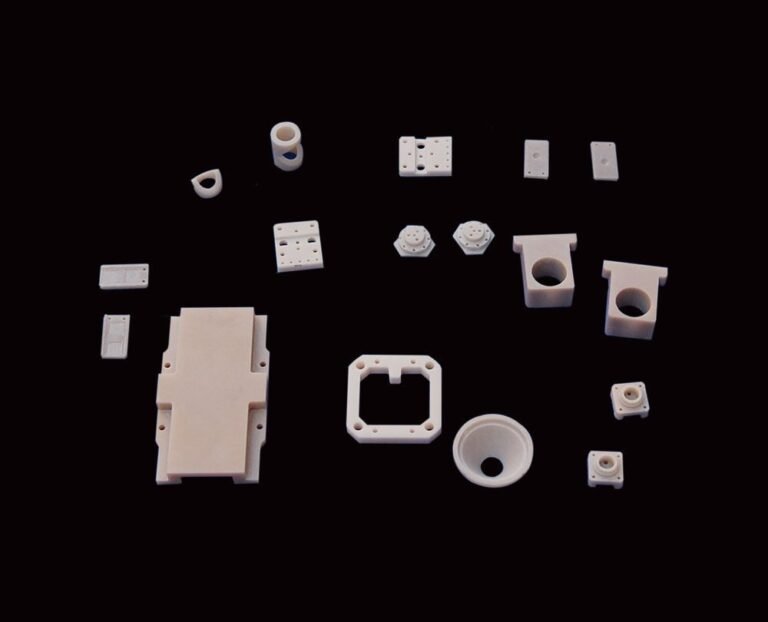
The engineering problem
What is actually failing
Heat density in an assembly has risen to the point where the existing path cannot carry it away. The usual fix, a metal spreader, is electrically conductive, so isolation has to be added somewhere and that adds another thermal interface.
The equipment context where this requirement is most acute is described under semiconductor equipment, where the thermal path competes with vacuum and cleanliness constraints. Where each ceramic sits in a tool of that kind is mapped in where each ceramic sits in a semiconductor tool. The material that carries heat and isolation across the same section is compared under aluminum nitride, and the same requirement read from the equipment side is under thermal management and AI hardware.
What the part has to deliver
These are the parameters that decide the material. Not all of them matter equally, which is why the dominant one is identified first.
| Requirement | What it governs |
|---|---|
| Thermal conductivity | High enough to move the heat across the available section |
| Electrical insulation | Maintained across the same section |
| Coefficient of expansion | Reasonably matched to the mating materials to limit stress |
| Flatness | Contact resistance depends on surface conformity as much as on conductivity |
| Thickness | Set by the thermal path, not by mechanical need |
Options and the reason behind each
Where two requirements conflict, the trade-off is explained before quoting rather than after.
| Material | Why it is chosen here |
|---|---|
| Aluminum nitride (AlN) | The only common ceramic that is both a good thermal conductor and an electrical insulator; the standard choice for power substrates and spreaders |
| Silicon carbide (SiC) | High thermal conductivity with semiconductor electrical behaviour, used where that is acceptable or required |
| Alumina (Al2O3) | Cheaper insulating option when the heat flux is moderate |
| Boron nitride (BN) | Machinable and non-wetting; useful for special thermal paths and release surfaces |
What the choice costs in production
These are the constraints that turn a material decision into a manufacturing route, and sometimes into a design change.
- Flatness and surface finish dominate contact resistance, so they are toleranced on the thermal face rather than the whole part
- Grinding a thin, large-area part flat without breaking it is the main manufacturing difficulty
- Thickness uniformity is measured across the part, not at one point, because a local thin area changes the thermal path
- Surface cleanliness matters: grinding residue in the interface degrades heat transfer
- Holes and features near the thermal face are planned so they do not create local cracking risk
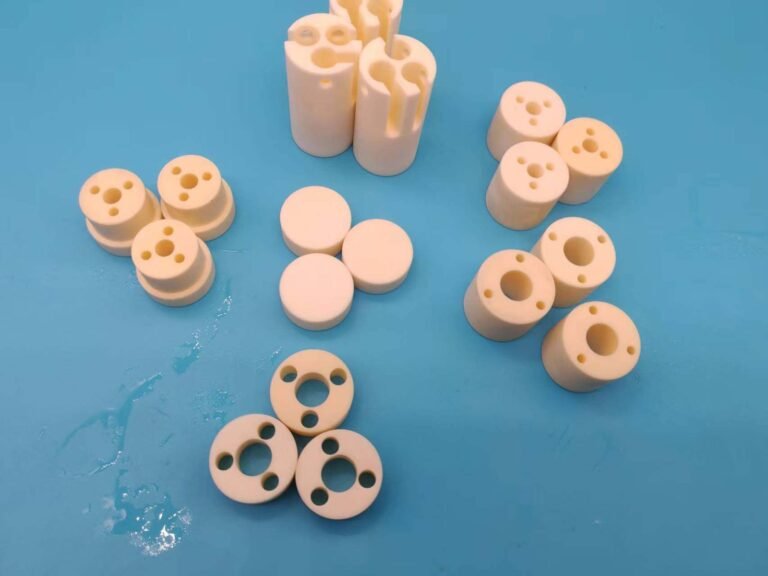
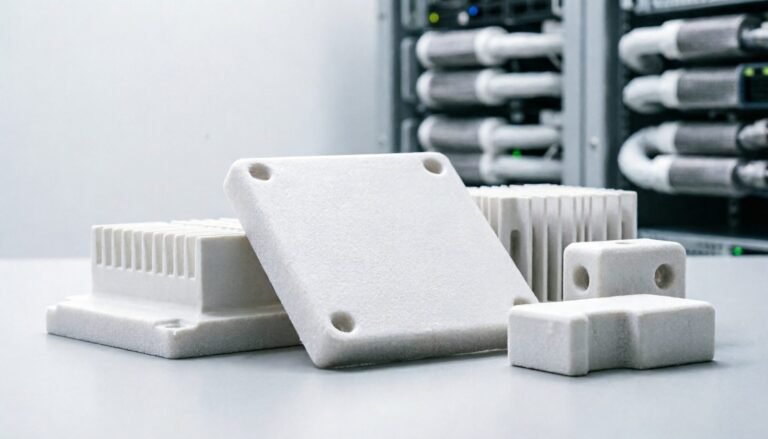
Capabilities depend on material, geometry, feature size and finishing requirements. Critical dimensions are reviewed against the drawing.
Where this solution is applied
Indicative component types. No customer names are published, and no application is described that we have not made.
Power module substrates and heat spreaders
Insulating thermal interfaces in dense electronics
Cooling-loop components in liquid-cooled assemblies
Sensor and detector mounting where both isolation and heat transfer are required
Thermal spacers in semiconductor equipment
How the result is verified
The inspection plan is agreed before machining, since ceramic cannot be reworked the way metal can.
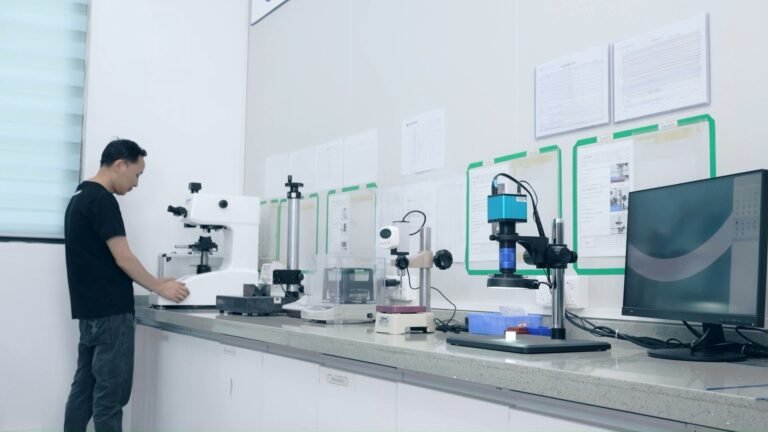
- Thickness measured at multiple points across the part
- Flatness and parallelism on the thermal face
- Surface roughness where a bonding or thermal interface follows
- Dimensional verification of locating features
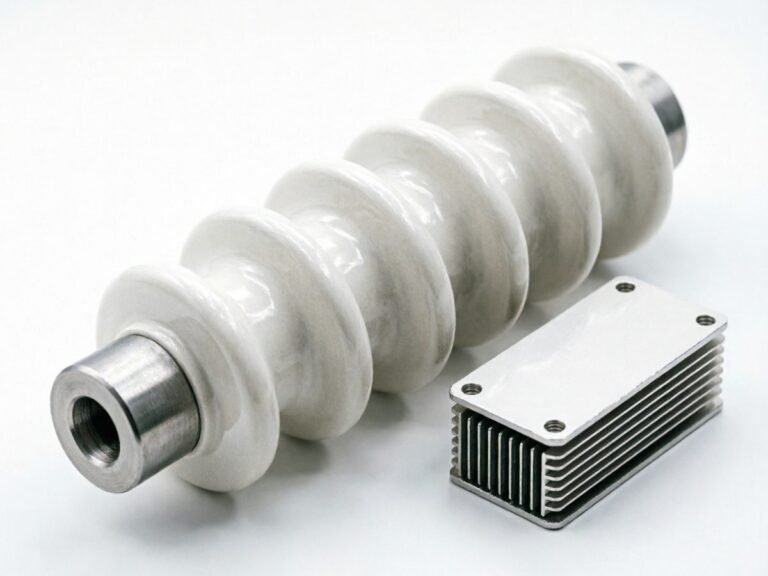
The part and the process
Frequently asked
Describe the problem and send the drawing
The requirement decides the material. Give the conditions and the review will state which material and route apply, and why.