
Engineering solution
Corrosion and Chemical: Ceramic Components for the Requirement
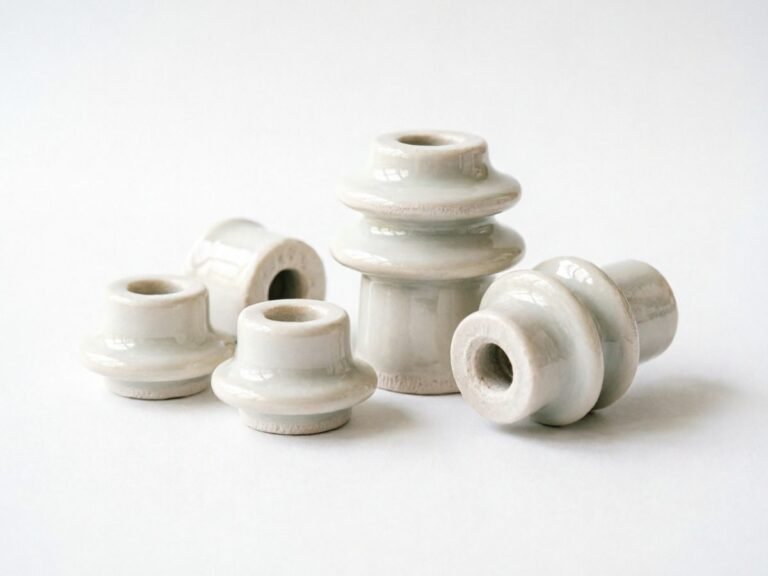
Service in acids, caustics, solvents and aggressive process media, where a metal part corrodes and a polymer part either swells or degrades.
The engineering problem
What is actually failing
A component is exposed to a process medium that attacks the existing material. Corrosion products contaminate the process, the part loses dimensions as it corrodes, and replacement intervals become unpredictable.
The industries these requirements come from, and the other conditions each of them imposes at the same time, are listed on the industry pages. Where the same part also runs in a process chamber, the additional constraints are collected under vacuum and semiconductor components. The duty where the medium alone sets the material choice is energy equipment, where pump and valve parts run in chemically active service. The parts that carry that duty at the sealing interface are in the rings and seal rings family, where the medium decides the face material.
What the part has to deliver
These are the parameters that decide the material. Not all of them matter equally, which is why the dominant one is identified first.
| Requirement | What it governs |
|---|---|
| Medium and concentration | The exact chemistry, not a general description |
| Temperature and pressure | Reactivity generally increases with both |
| Continuous or intermittent exposure | Intermittent wetting and drying is often more aggressive than continuous immersion |
| Mechanical load | Whether the part carries load while exposed |
| Contamination limits | Whether any dissolution is acceptable in the process |
Options and the reason behind each
Where two requirements conflict, the trade-off is explained before quoting rather than after.
| Material | Why it is chosen here |
|---|---|
| Alumina (Al2O3) | Broad chemical resistance and low cost; the standard choice for most aggressive media |
| Silicon carbide (SiC) | Very good resistance, particularly at high temperature and with strong alkalis |
| Silicon nitride (Si3N4) | Resistance combined with structural strength |
| Zirconia (ZrO2) | Resistance with high toughness where impact is present |
| Boron nitride (BN) | Non-wetting behaviour in contact with molten metal and glass |
What the choice costs in production
These are the constraints that turn a material decision into a manufacturing route, and sometimes into a design change.
- Surface finish affects corrosion behaviour: a smoother surface has less area for attack to initiate
- Pores and surface defects are the weak point, so the material grade density matters
- Sharp features and deep crevices create local environments that differ from the bulk medium
- Where the medium is abrasive as well as corrosive, the wear route dominates the design
- Contamination from tooling is avoided, since a trace of metal in the surface can behave differently from the ceramic itself
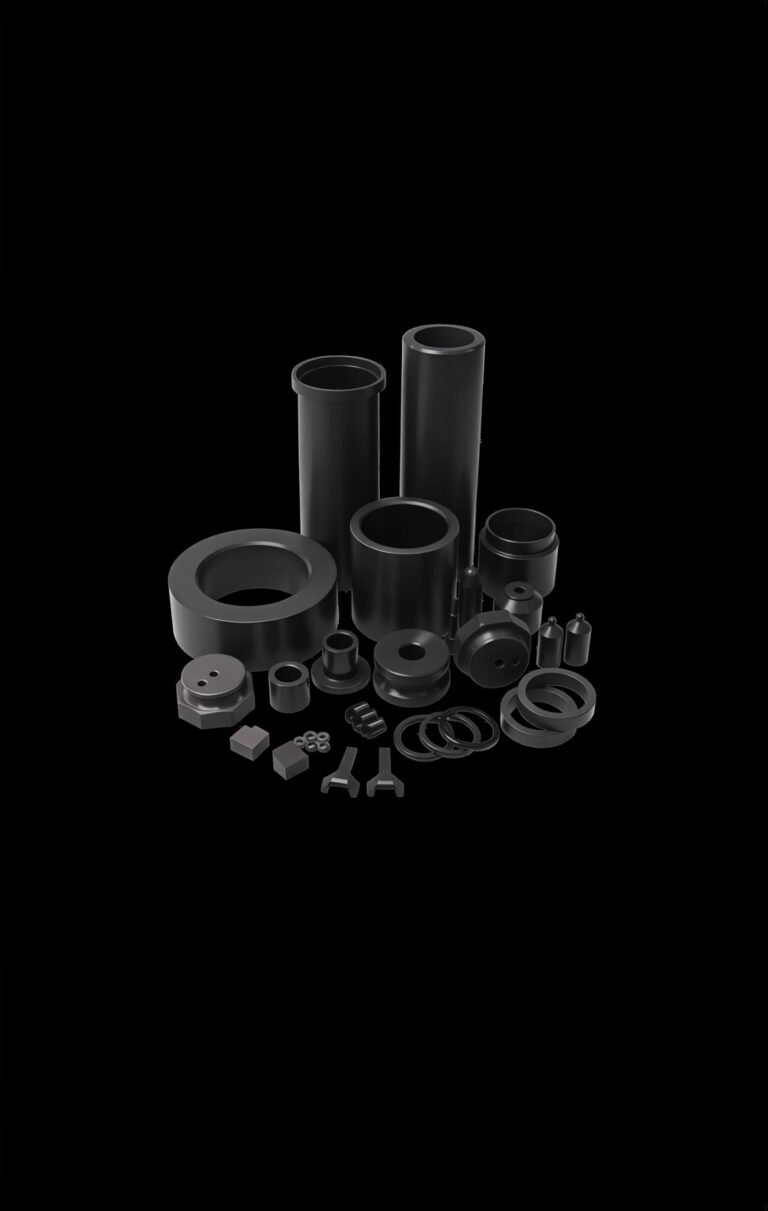
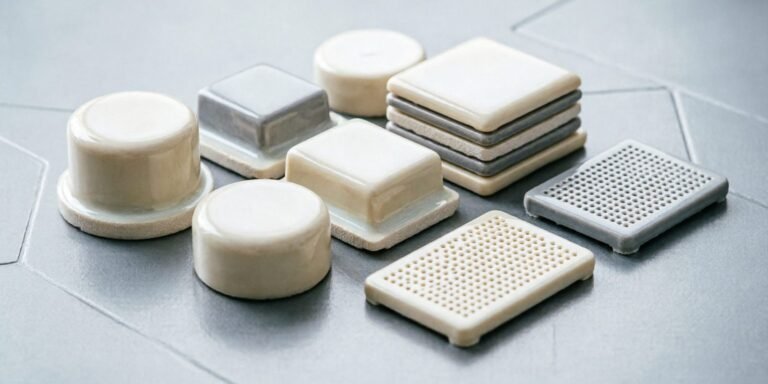
Capabilities depend on material, geometry, feature size and finishing requirements. Critical dimensions are reviewed against the drawing.
Where this solution is applied
Indicative component types. No customer names are published, and no application is described that we have not made.
Pump and valve components for chemical service
Flow restrictors and nozzles in dosing equipment
Insulating parts in corrosive environments
Analytical and laboratory hardware
Wear surfaces in slurry and effluent handling
How the result is verified
The inspection plan is agreed before machining, since ceramic cannot be reworked the way metal can.
- Dimensional verification including wall thickness
- Surface roughness on media-facing surfaces
- Visual inspection for cracks and surface defects
- Material certificate confirming grade and density
The part and the process
Frequently asked
Describe the problem and send the drawing
The requirement decides the material. Give the conditions and the review will state which material and route apply, and why.