
Component family
Custom Complex Ceramic Parts
Parts that combine several families at once, or that no standard description covers. This is the category most custom ceramic work actually falls into.
- Drawing-based engineering review
- Compound datums held
- Matched sets and retrofits
- One-off evaluation parts
A custom complex ceramic part is any component whose geometry combines several families at once – a bore with a groove and a profile, a matched set, a compound datum – or that fits no standard description. These parts are produced to the customer drawing, on the same forming and grinding routes as the standard families, with the process sequence planned per part. The engineering content is in the planning: which features are made in one setup, how the datums are held, and what the inspection plan measures first.
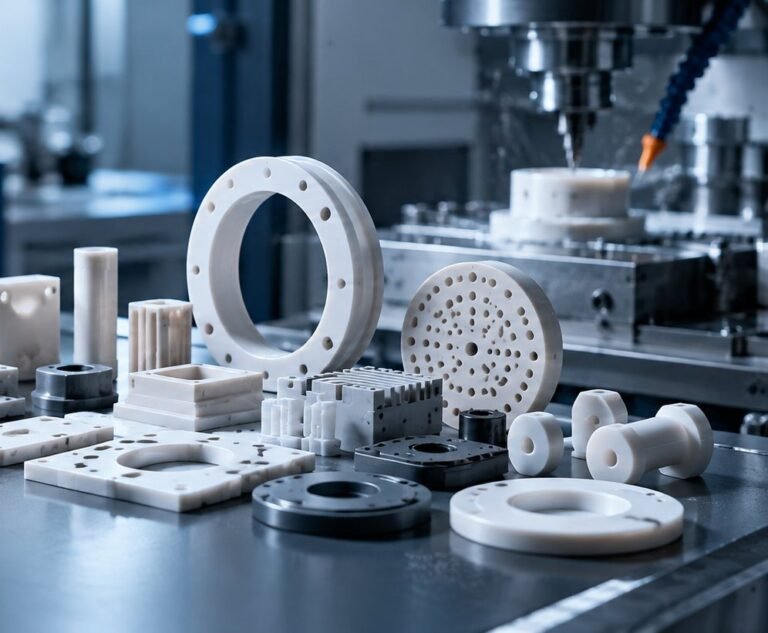
Machined custom ceramic parts produced from your drawing — one-off prototypes, matched assemblies and retrofit work, reviewed per project.
Critical features
What this geometry is judged on
Each row ties one feature to why it matters, where it is at risk in manufacture, and how it is verified. The confirmed figures for these features sit further down the page, tied to the feature they were measured on.
Combined features
Bore, face, slot and profile on one part, which is where holding the part becomes the problem rather than cutting it.
Compound datums
The datum scheme decides how the part can be held and measured, so it is settled at review.
Matched sets
Machined and inspected as a set rather than as individual parts, so the set works as an assembly.
Reverse-engineered parts
Measured from your sample, with the dimensions that matter agreed before anything is made.
Evaluation parts
One-offs for a design that is still moving, where the purpose is to learn something before committing to a route.
Section thickness
It sets how much stock can be removed and how the part is supported while it is cut.
| Feature | Why it matters | Manufacturing risk | Inspection method |
|---|---|---|---|
| Functional features as marked | The drawing decides what matters | Feature interaction forces the sequence to change | Instrument chosen per feature at review |
| Datum scheme | Decides how the part is held and measured | Fixturing a part with no flat reference surface | CMM alignment to the drawing datums |
| Section thickness | Sets stock removal and support while cutting | Tolerance stack-up across multiple setups | Ultrasonic thickness gauge or micrometer |
| Edge and corner condition | Brittle failure starts at the edges | Keeping the design producible while it still moves | Optical inspection per the agreed criterion |
Possible ceramic materials
Material options and the reason behind each
The material is chosen from the dominant requirement. Where two requirements conflict, the trade-off is explained before quoting.
Alumina, zirconia, silicon carbide, silicon nitride, aluminum nitride or boron nitride
The dominant requirement, not preference, decides the material
Where two requirements conflict, the trade-off is explained before quoting
Process routes
How these parts are actually made
The route is chosen from the geometry and the tolerance, not from the material alone. It is stated with the quotation so the price can be read against the method.
Process route agreed at review
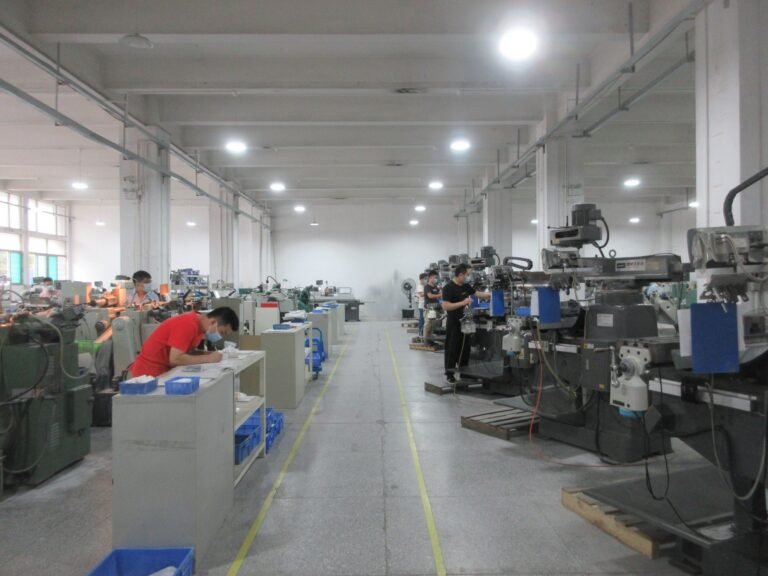
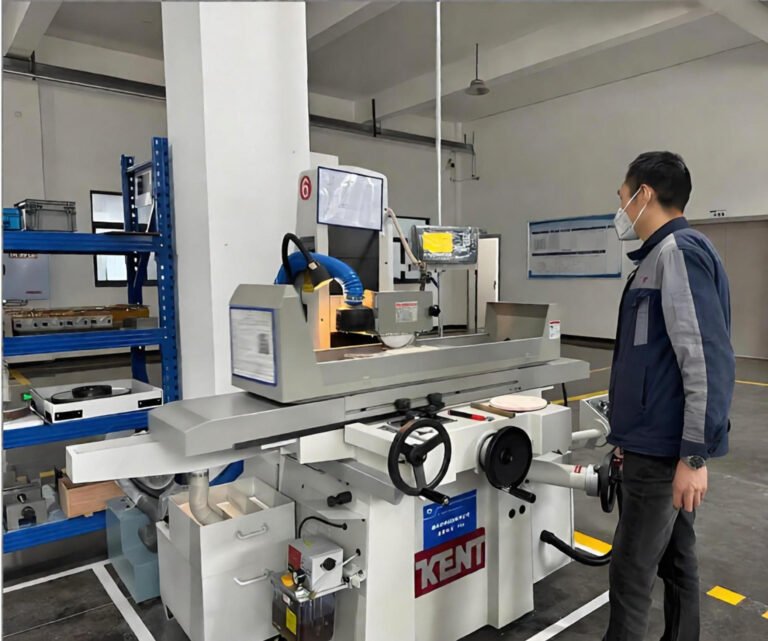
Complex parts are produced by combining green machining with diamond grinding and, where the geometry allows, by near-net forming followed by a grinding operation to establish final tolerance.
Setup strategy
Where features must stay aligned, the setup sequence is planned so that the alignment is created in one operation rather than transferred between several.
Feature-by-feature inspection
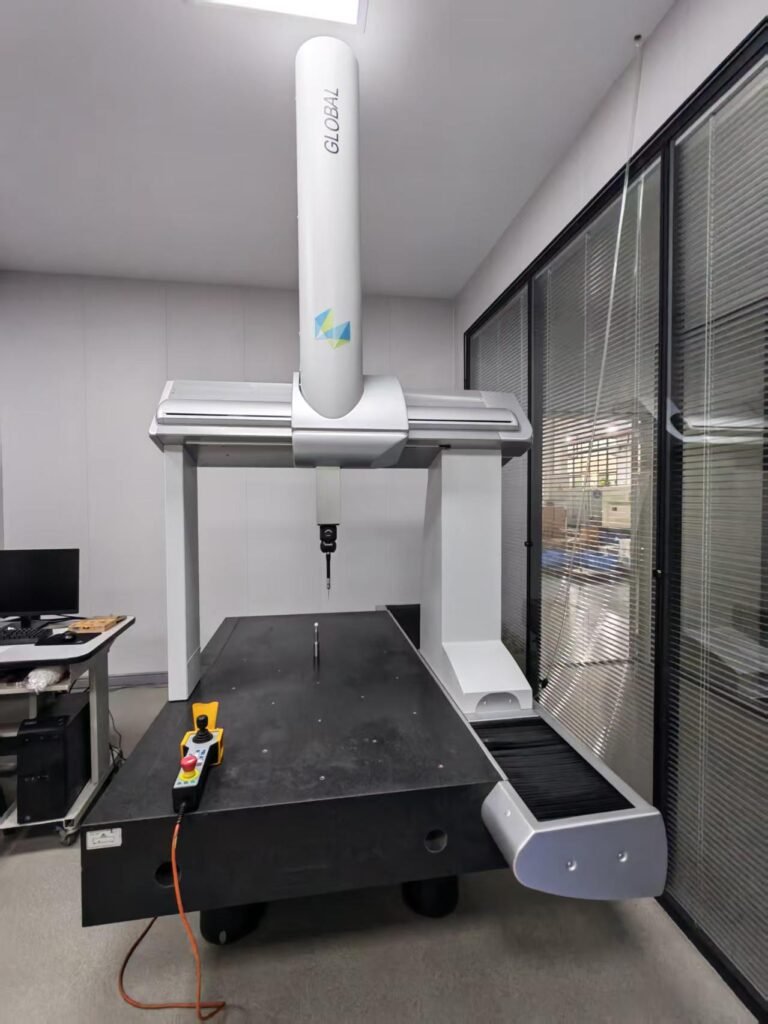
Each functional feature carries its own callout and its own inspection method, and the inspection plan is stated with the quotation.
Where the difficulty sits
- Feature interaction: one tight feature can force the whole sequence to change
- Fixturing a part with no flat reference surface
- Managing tolerance stack-up across multiple setups
- Verifying features that cannot all be reached in one measurement
- Keeping the design producible while it is still being revised
LimitBrittle material fails differently from metal. A feature that is merely difficult in steel can be impossible in ceramic, and the review states which of the two applies.
Confirmed capability
Customizable geometry and precision capability
Everything below is produced from the customer drawing. The figures are what the shop is confirmed to hold on the features this family carries, not a general tolerance for the whole part.
| Feature | Confirmed | Applies to |
|---|---|---|
| Hole diameter tolerance | 0.003 mm | Bores and cross holes on multi-feature parts |
| Roundness | 0.0005 mm | Ground cylindrical and bore features |
| Parallelism | 0.002 mm | Opposed faces where the drawing calls it |
| Minimum slot width | 0.2 mm | Slots and narrow features produced by diamond grinding |
| Surface roughness | Ra 0.02 µm | The faces the drawing marks as functional |
Capabilities depend on material, geometry, feature size and finishing requirements. Critical dimensions are reviewed against the drawing.
| Measurement requirement | How it is verified |
|---|---|
| Each feature the drawing marks as functional | The instrument is chosen per feature at review and stated in the inspection plan |
| Datum features | CMM alignment to the drawing datums, verified before any other measurement |
| Section thickness at the thinnest point | Ultrasonic thickness gauge or micrometer, where access allows |
| Edge and corner condition throughout the part | Optical inspection against the criterion agreed before machining |
Procurement risks
What goes wrong, and where it is avoided
A tolerance stack-up across multiple setups can consume the whole budget on a multi-feature part; the datum scheme is settled at review.
A design still moving can invalidate a quoted route; revisions are quoted with assumptions stated.
Features that cannot all be reached in one measurement need a stated inspection order; the plan is agreed before machining.
A reverse-engineered part inherits the sample’s wear; critical dimensions are re-agreed from function, not copied from the worn part.
Applications
Where the family is used
Component examples only. No customer names are published.
- Custom machinery and special-purpose equipment
- R and D and laboratory hardware
- Retrofit and replacement parts no longer available
- Prototype builds where the design is not yet frozen
- Instrumentation and analytical equipment
- Profiled and contoured parts with no standard family
- Seals with an integral shaft or flange
- Multi-feature parts that need one setup to hold alignment
- Prototype assemblies and first-article builds
- Replacement and obsolete-equipment parts no longer catalogued
- Parts that combine several families on a single drawing
Bespoke, on this page, means a part with no catalogue equivalent: the geometry comes from your drawing or from a sample you send in, and the dimensions that decide whether it works are set by the application rather than by a stock list. That covers a one-off evaluation part for a design that is still moving, a matched set machined so the parts fit each other, and a retrofit part reverse engineered from something already in service. Each starts with the same step, an engineering review of the drawing before any price is given.
That review looks for the places where a bespoke geometry meets the limits of the material. Thin sections, sharp internal corners, deep narrow slots and seal edges are where a drawing that is straightforward in metal needs a different approach in ceramic, and they are the features that decide the achievable value on the finished part. Where a feature cannot be held as drawn, it is raised before production rather than discovered at inspection. The design for manufacture problems that come up most often, and how each is resolved on a drawing, are set out separately. Parts specified for low moving mass and thin structural walls go through the same review.
Ordering
Custom Ceramic Parts From First Article to a Series
The same drawing does not run the same way at five pieces and at five hundred. Quantity changes the process before it changes the price.
At low quantity the cost sits in the work that happens once: the blank is formed, the fixture is made, and the first part is measured in full before the rest of the order is released.
As quantity rises those one-off costs spread across the parts, and what decides the price instead is how long the diamond tooling lasts between dresses and how closely the setup repeats from part to part.
Features that can be formed before firing cost less than features that must be ground afterwards at any order size, so a drawing change that removes a ground surface pays back whether the order is one part or a series.
A requirement that cannot be met as drawn is raised at the drawing review rather than found at inspection, and what changes between a reviewed prototype and a repeating order is set out under prototype to production.
The documents that travel with an order are agreed on the purchase order, so they are planned into the inspection stage rather than assembled afterwards. What is measured, on which instrument, and what the order is checked against are described under quality control.
Engineering FAQ
Frequently asked
What if I do not know the material?
Send the operating conditions: temperature, load, medium, electrical requirement and duty cycle. The material follows from the requirement, and that reasoning is returned with the quote.
Can you work with a design that is not finished?
Yes, and it is common. Flag it at the start. A design that is still moving is quoted with the assumptions stated, so a later revision does not invalidate the price.
Do you take on parts other suppliers declined?
Parts previously considered difficult to manufacture can be reviewed when the drawing and the stated manufacturing constraint are provided. Send the drawing and, if you have it, the reason it was declined; knowing the stated obstacle saves a review cycle.
Request a quote
Have a Custom Ceramic Part Drawing or Sample?
Geometry, material, quantity and the dimensions that matter. You get an engineering review before any price is given. Supplying the items below with the drawing removes the most common cause of a revised quotation.
- A 3D model plus a 2D drawing, which is usually the quickest combination to review
- Identify which dimensions are functional and which are nominal
- State whether the design is frozen or still subject to change
- Give the application, even if it is only two lines of text
- For a reverse-engineered part, the sample and the dimensions that matter in service
| Type | Form |
|---|---|
| Combinations of bore, face, slot and profile | in one part |
| Multi-feature parts | with compound datums |
| Assemblies | machined as a matched set |
| Retrofit parts | reverse engineered from a sample |
| One-off evaluation parts | for a design that is still moving |