
Engineering solution
Electrical Insulation: Ceramic Components for the Requirement
Dielectric strength, creepage distance and dimensional stability under voltage. Ceramic insulates where polymers degrade, creep or cannot hold a tolerance.
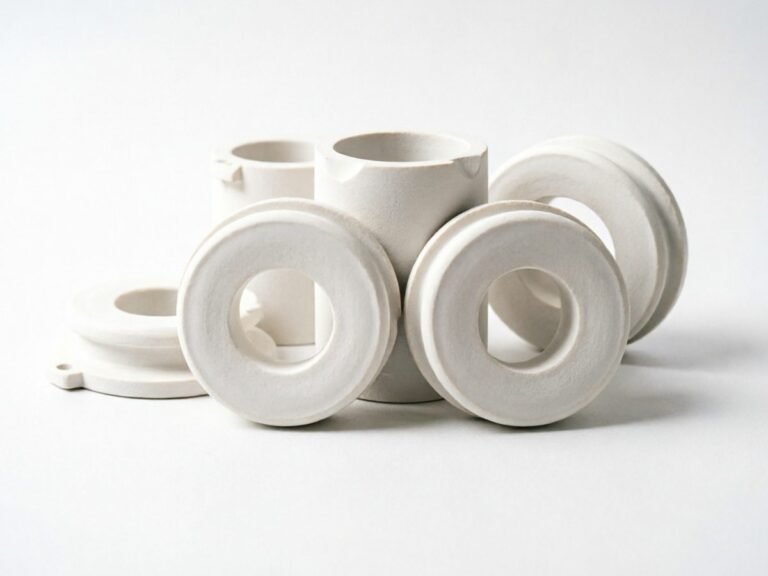
The engineering problem
What is actually failing
An insulating component has to hold voltage in an environment that damages plastics: elevated temperature, ultraviolet exposure, chemical contact or continuous mechanical load. Tracking and creepage become the failure mode rather than simple breakdown.
What the part has to deliver
These are the parameters that decide the material. Not all of them matter equally, which is why the dominant one is identified first.
| Requirement | What it governs |
|---|---|
| Dielectric strength | Sufficient for the working voltage across the section thickness |
| Creepage and clearance | Geometry that satisfies the required distance rather than relying on material alone |
| Thermal stability | No loss of insulation at the service temperature |
| Dimensional stability | Tolerance held over the operating temperature range |
| Tracking resistance | No conductive path forming on the surface under contamination |
Options and the reason behind each
Where two requirements conflict, the trade-off is explained before quoting rather than after.
| Material | Why it is chosen here |
|---|---|
| Alumina (Al2O3) | The standard electrical insulator; high volume resistivity and good mechanical strength at low cost |
| Aluminum nitride (AlN) | Where the insulator must also conduct heat away, as in power electronics |
| Boron nitride (BN) | Insulation combined with non-wetting and easy machining |
| Zirconia (ZrO2) | Mechanical strength where the part is also subjected to impact |
| Silicon nitride (Si3N4) | Insulation with structural strength under cyclic load |
What the choice costs in production
These are the constraints that turn a material decision into a manufacturing route, and sometimes into a design change.
- Wall thickness and bore geometry are what set the dielectric performance, so they are toleranced functionally
- Surface contamination after grinding can degrade insulation, so cleaning is part of the process rather than an afterthought
- Creepage features such as ribs and grooves have radii, which has to be reflected in the drawing
- Metallised or plated variants require a substrate surface finish specified for the coating process
- Very thin insulating sections are limited by handling and chipping as much as by the material
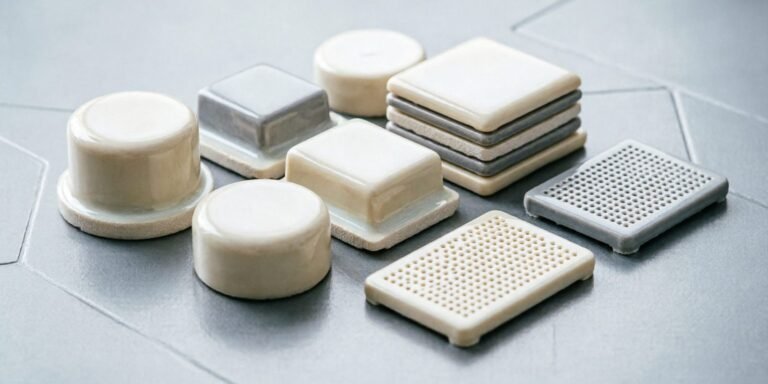
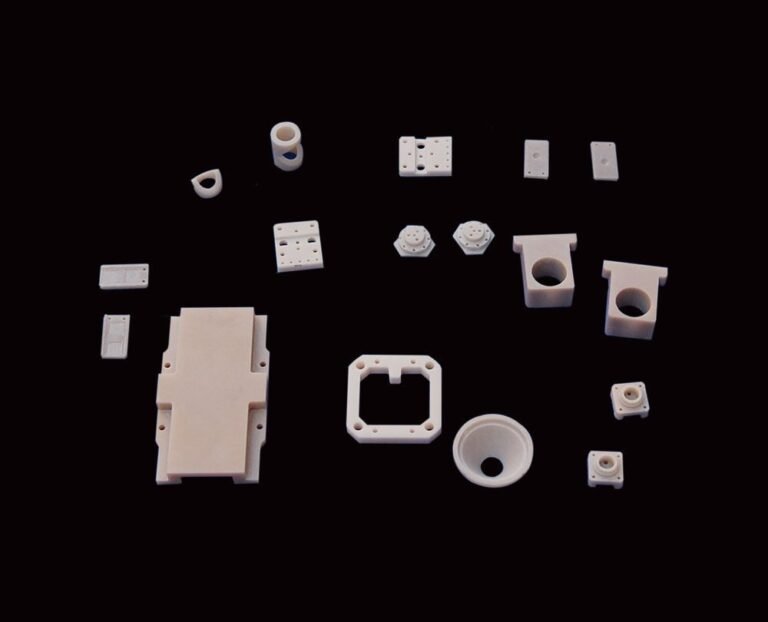
Capabilities depend on material, geometry, feature size and finishing requirements. Critical dimensions are reviewed against the drawing.
Where this solution is applied
Indicative component types. No customer names are published, and no application is described that we have not made.
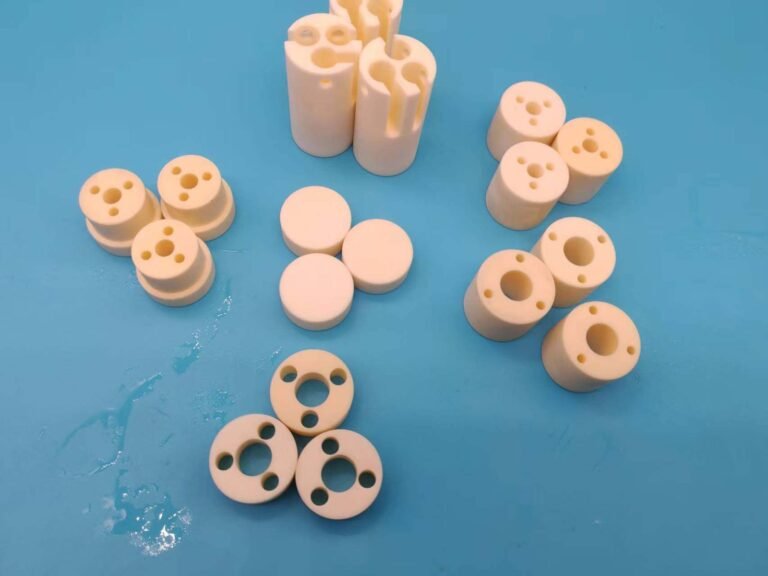
Insulators, bushings and standoffs
Insulating sleeves for heaters and thermocouples
Substrates and heat spreaders in power modules
Spark and ignition components
Isolating washers, spacers and locating parts
How the result is verified
The inspection plan is agreed before machining, since ceramic cannot be reworked the way metal can.
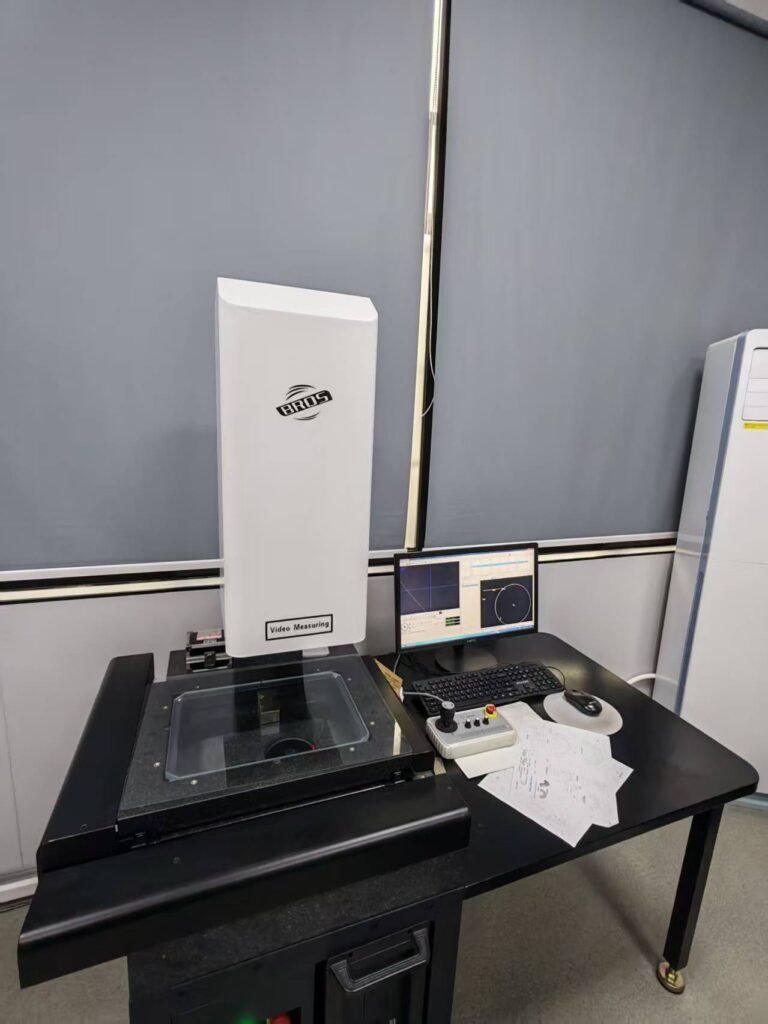
- Dimensional verification of the insulation wall thickness
- Concentricity between conductor passage and outer surface
- Surface finish where coatings or metallisation follow
- Visual inspection for cracks, chips and contamination
- Electrical verification by the customer, since ceramic parts are supplied to dimension rather than to a voltage rating
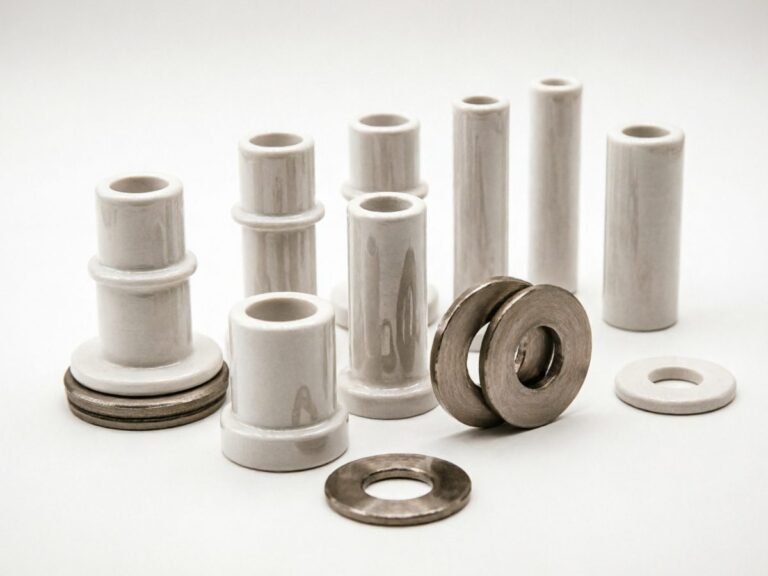
The part and the process
Frequently asked
Describe the problem and send the drawing
The requirement decides the material. Give the conditions and the review will state which material and route apply, and why.