
Custom ceramic manufacturing
Custom Silicon Carbide Ceramic Parts Manufacturer
Extreme hardness with high-temperature capability, thermal shock resistance and chemical inertness. Chosen when the service conditions are the limiting factor, not the budget.
- Drawing-based customization — every part produced to your drawing, not stock
- Prototype-to-production — one-off evaluation parts through repeat production
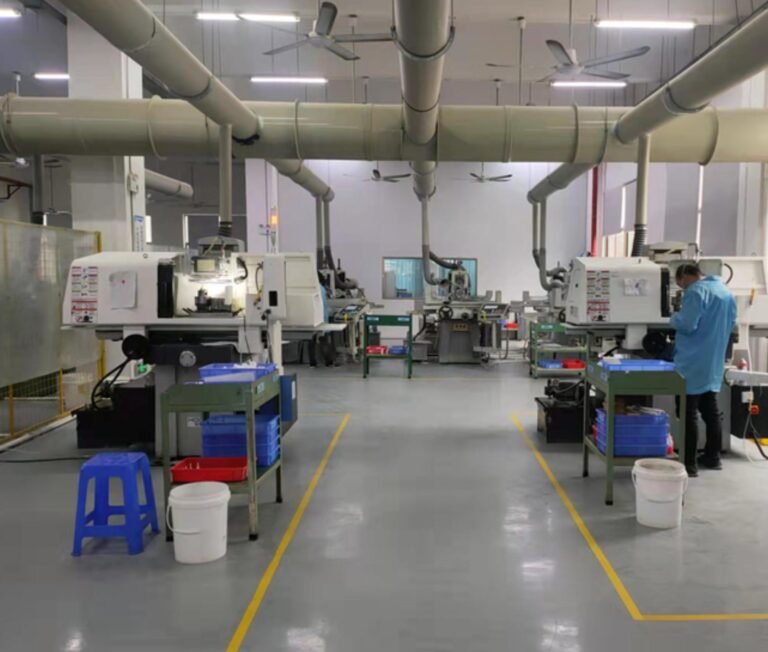
- Precision machining & inspection — diamond grinding and documented verification
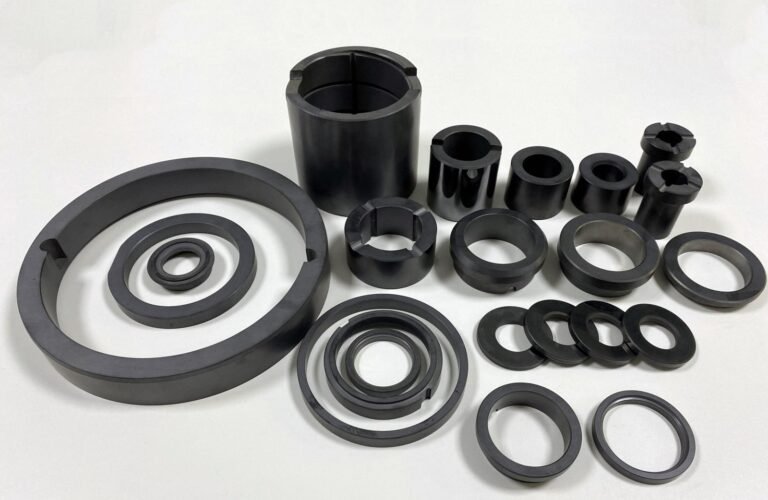
What we manufacture
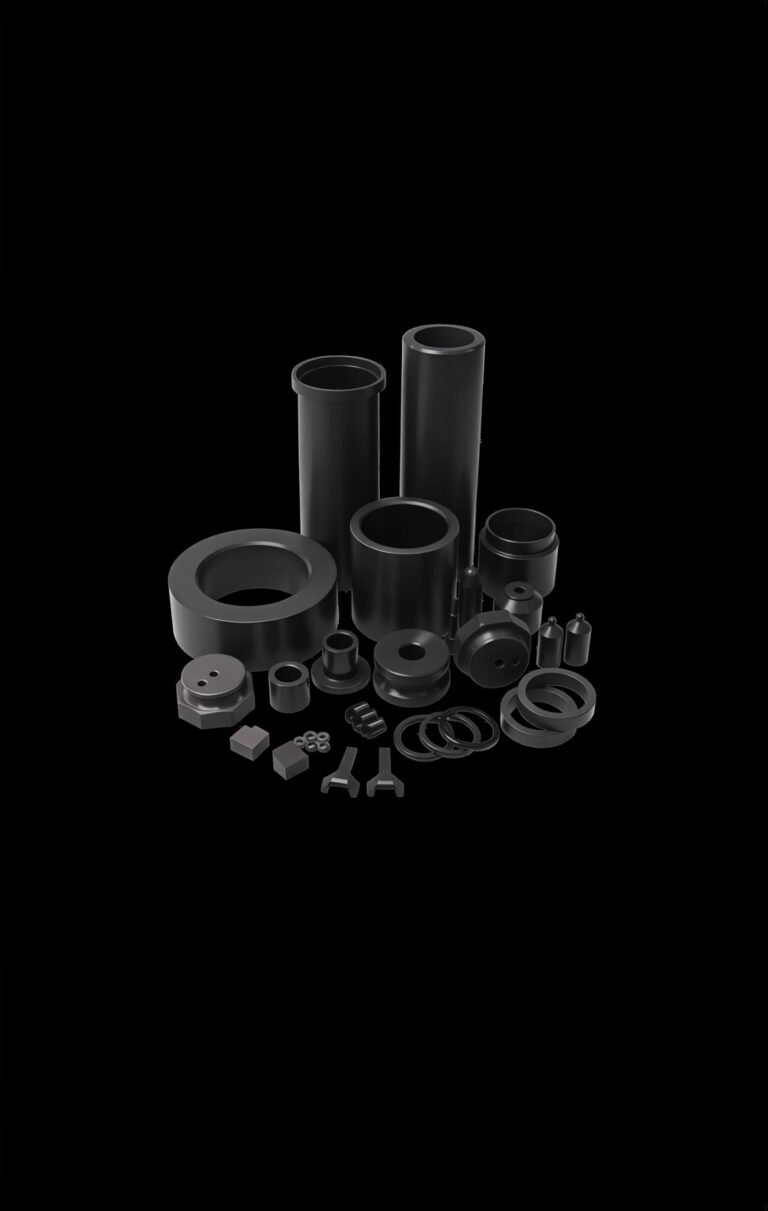
Custom Silicon Carbide Components We Manufacture
Precision silicon carbide components manufactured to customer drawings, with geometry and critical features evaluated against application requirements.
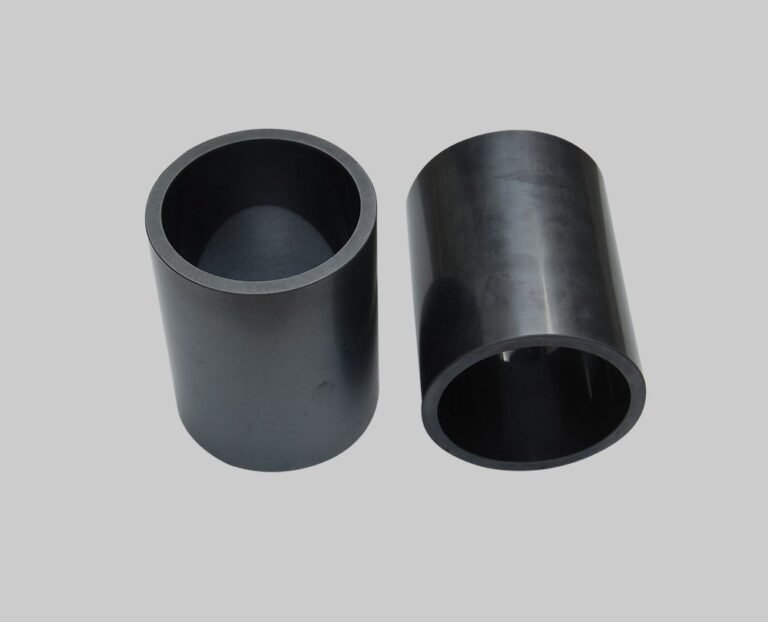
Silicon Carbide Bushings
Wear-resistant, electrically conductive bushings for pumps and rotary service.
- Bore and OD ground to the drawing
- Seating faces for assembly
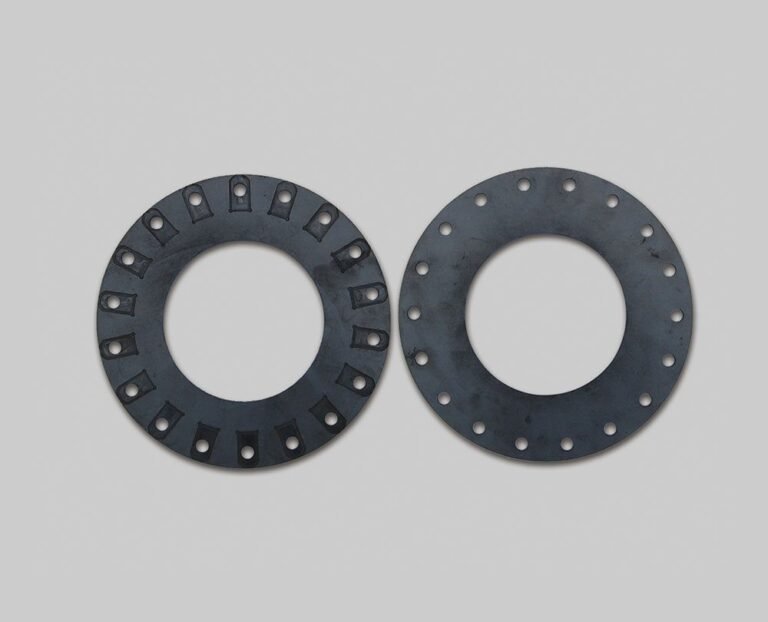
Silicon Carbide Flange Rings
Seal and mating rings for aggressive-media and chemical service.
- Flat, ground sealing faces
- Flange and bore geometry to the drawing
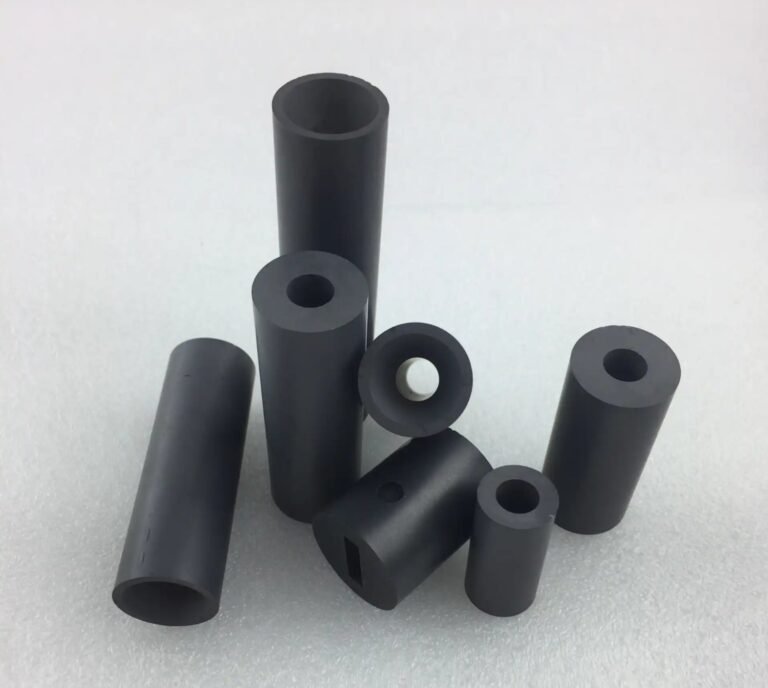
Silicon Carbide Tubes & Bushings
Wear and flow parts for slurry, abrasive and high-temperature service.
- Straight and stepped bores
- Ground faces and ends
Blasting & Spray Nozzles
Erosion-resistant nozzles for blasting and spray applications.
- Orifice and profile to the drawing
- Wear surfaces ground to finish
Wear Liners & Seal Rings
Slurry-handling liners and seal rings for aggressive media.
- Plates, liners and rings
- Batch-consistent material
Furnace Supports & Semiconductor Parts
High-temperature fixtures and semiconductor process components.
- Feature-specific geometry review
- Material confirmed in writing with quotation
Engineering problems we help solve
Engineering Challenges Addressed with Custom Silicon Carbide
| Property | Engineering benefit | Relevant application condition |
|---|---|---|
| Vickers hardness 2100 HV1 | Best-in-range abrasion and erosion resistance | Slurry, blast and erosive flow service |
| Thermal conductivity around 100 W/m·K | Heat moves out of the hot zone | Rapidly cycled furnace and process parts |
| Maximum use temperature 1600 °C in air | Structural integrity retained at temperature | Furnace supports and hot fixtures |
| Chemical resistance retained at temperature | Withstands aggressive media | Chemical and molten-material contact |
How it works
From Your Drawing to Finished Silicon Carbide Components
You submit the drawing. We evaluate manufacturability. The component is made and inspected to the agreed specification.
Precision & inspection
Precision Machining and Inspection for Silicon Carbide Parts
Confirmed capability figures
The figures below are this shop’s confirmed manufacturing capability, quoted in this material’s context. They are feature-specific capability references, not blanket tolerances for every material or geometry.
These values are feature-specific capability references, not blanket tolerances for every material or geometry. Achievability depends on material, part size, wall thickness, feature geometry, datum scheme and finishing process. Final capability is confirmed during drawing review.
The machining route behind these figures is described under precision grinding, and the equipment that verifies them under inspection and metrology.
Engineering essentials
Silicon Carbide Grades & Engineering Essentials
Material Family Selection
Representative published values for material selection. Where a property governs the design, state it on the drawing so it is confirmed against the supplied batch.
Material properties are representative and grade-dependent. Final material selection should be confirmed against the specific grade and application conditions. The inspection certificate for the batch supplied is the governing document for a delivered order.
Silicon carbide is supplied in several commercial families whose properties differ. The property matrix gives typical values for pressureless sintered silicon carbide; reaction-bonded, recrystallised and CVD forms differ and are not a universal SiC specification.
View Full Engineering PropertiesSilicon Carbide against Silicon Nitride
Strength in bending and heat removal separate the range faster than any other pair of properties. Each bar is the range published for that material family, taken from the same comparison table that appears in the selection centre.
Flexural strength, MPa — Silicon carbide (SiC): 400 · Silicon nitride (Si3N4): >600
A longer bar carries more load before it breaks. A range covers the grades supplied in that family rather than one nominal figure.
Source: Flexural strength (MPa)
Thermal conductivity, W/m·K — Silicon carbide (SiC): 100 · Silicon nitride (Si3N4): 15 – 20
A longer bar moves heat away faster. Conducting heat while still insulating electrically is the pairing power electronics needs, and it is why this property is read next to strength.
Source: Thermal conductivity (W/m·K)
What it is not good at
Stating this up front prevents a material being selected for the one thing it cannot do.
- Low fracture toughness; it chips and cracks rather than deforming
- Very slow to grind, which drives both cost and lead time
- Electrical conductivity in many grades, which rules it out where insulation is required
- Tight tolerances cost significantly more than the same tolerance in alumina
Questions
Frequently Asked Questions About Custom Silicon Carbide Parts
Is silicon carbide electrically conductive?
Many grades are. If the part has to insulate, say so at the outset, because it determines whether SiC is the right answer at all.
How much more expensive is SiC than alumina?
It depends heavily on the geometry and the tolerance, because the cost is dominated by grinding time. A simple part in a loose tolerance is far cheaper than a complex part in a tight one.
Can silicon carbide be used in a furnace?
It is a standard high-temperature material with good thermal shock resistance, and it is common in furnace supports and furniture.
Request a quote
Request a Quote for Custom Silicon Carbide Ceramic Parts
Send the drawing, the material grade if it is fixed, the quantity, the critical dimensions and tolerances, the required surface finish and the operating environment. The material is confirmed in writing with the quotation.
Engineering reference
Engineering Reference Library
Complete material engineering detail, retained on this page. Open a group for the full reference.
Material Fundamentals & Selection
Material overview
What is silicon carbide ceramic?
Silicon carbide (SiC) is a compound of silicon and carbon produced in several commercial families, including pressureless sintered, reaction-bonded and CVD material, whose properties differ. Published typical values for pressureless sintered silicon carbide are a density of 3.1 g/cm³, a Vickers hardness of 2100 HV1, a flexural strength of 400 MPa and a maximum use temperature in air of 1600 °C. It is specified where abrasion, erosion or high-temperature service is the limiting factor rather than the budget: nozzles, liners, furnace components and chemical contact parts.
When to choose Silicon Carbide
Each row links a published property to the engineering benefit it buys and the condition where that benefit is the reason for the choice.
| Property | Engineering benefit | Relevant application condition |
|---|---|---|
| Vickers hardness 2100 HV1 | Best-in-range abrasion and erosion resistance | Slurry, blast and erosive flow service |
| Thermal conductivity around 100 W/m·K | Heat moves out of the hot zone | Rapidly cycled furnace and process parts |
| Maximum use temperature 1600 °C in air | Structural integrity retained at temperature | Furnace supports and hot fixtures |
| Chemical resistance retained at temperature | Withstands aggressive media | Chemical and molten-material contact |
If your project looks like one of these
- Abrasive and erosive service: nozzles, liners, blast hardware
- High-temperature components in furnaces and process equipment
- Chemical and molten-material contact parts
- Components that see rapid thermal cycling
- Semiconductor and plasma-facing hardware
Where this material is chosen over the alternative is compared in the silicon carbide vs silicon nitride note. Service in chemically active media is covered under corrosion and chemical resistance, and the route to finished tolerance in fired material under precision grinding.
Why engineers select it
Each of these is a reason to choose it. The limitations that follow are the reason not to.
- Very high hardness, giving the best abrasion and erosion resistance among the materials in this range
- High thermal shock resistance relative to alumina, so it tolerates rapid temperature change
- High thermal conductivity combined with high-temperature strength
- Very good chemical resistance, including at temperature
- Low density relative to its stiffness
Complete Silicon Carbide Property Table
| Property | Typical value |
|---|---|
| Colour | Black |
| Density (g/cm³) | 3.1 |
| Flexural strength, 20 °C (MPa) | 400 |
| Compressive strength, 20 °C (MPa) | 2600 |
| Elastic modulus, 20 °C (GPa) | 410 |
| Fracture toughness, 20 °C (MPa√m) | 4 |
| Poisson’s ratio, 20 °C | 0.16 |
| Vickers hardness HV1 (kg/mm²) | 2100 |
| Rockwell hardness R45N | 88 |
| Thermal expansion coefficient (×10⁻⁶/K) | 4 |
| Thermal conductivity (W/m·K) | 100 |
| Thermal shock resistance (ΔT, °C) | 400 |
| Specific heat (J/g·K) | 0.67 |
| Maximum use temperature, in air (°C) | 1600 |
| Volume resistivity, 20 °C (Ω·cm) | 105 |
Material engineering reference: Silicon Carbide (SiC) for Custom Precision Components
Applications & Alternative Ceramics
Silicon Carbide in service
The sectors below are the ones that specify this material, with the component that carries the requirement and the material property that earns the place. Each entry opens the sector page for the full component list.
A sector that is not listed is not a sector that is refused. It means the material has not been the obvious answer there, and the review starts from the operating condition instead.
What to compare it against
These are the alternatives that most often come up against Silicon Carbide, with the reason each might be preferred.
What is produced in this material
What is produced in this material
Blasting and spray nozzles
Wear liners in slurry handling
Furnace supports and high-temperature fixtures
Seal rings for aggressive media
Semiconductor process components
Corrosion-resistant flow parts for service to 1600 C
Sliding and rubbing parts in abrasive media
Kiln furniture and high-temperature supports
Sintered forms, wear surfaces and custom shapes
Silicon carbide is supplied as a sintered material rather than cut from stock bar, so the first question on a silicon carbide enquiry is which family the part is produced in, not what the outline looks like. Pressureless sintered, reaction bonded and CVD material are not interchangeable, and the same outline can be quoted in more than one of them. Naming the service condition, whether that is abrasion, temperature, chemical contact or electrical behaviour, settles the family before the shape is discussed. Flat parts for furnace furniture and wear surfaces are produced as plates and blocks, flow paths and protective sheaths as tubes and sleeves, and sealing faces as rings and seal rings.
Because the material is ground rather than cut, the cost of a silicon carbide part sits in grinding time. Two features drive it harder than anything else: how much material has to come off after firing, and how sharp the edges are allowed to stay. Edge breaks stated on the drawing reduce both the scrap rate and the price. A drawing that combines several of the shapes above in one part is quoted under custom complex ceramic parts. Abrasive and sliding service is covered under wear and friction, and the finishing route under precision grinding.
Manufacturing & Design Considerations
What the material costs in production
The material decision and the manufacturing route are the same decision seen from two ends. Green machining, diamond grinding, lapping and polishing each have a place, and the route depends on the geometry and the tolerance.
- Diamond grinding only, with a long cycle time because of the hardness
- Diamond tool wear is rapid, which is reflected in the price rather than absorbed silently
- Sharp edges are a defect risk rather than a design feature, so edge breaks are specified
- Complex geometry is feasible but the grinding cost rises faster than for softer ceramics
What to expect on the drawing
Tolerance and finish are specified per feature. An overall callout on the whole part is the most common cause of an unnecessarily expensive quotation.
Tolerance considerations
- Tolerances are reached by diamond grinding on fired material
- Cycle time, not accuracy, is the constraint: the machine can hold the tolerance but it takes considerably longer
- Feature size limits apply earlier than in alumina because tool survival is shorter
Surface finish considerations
- As-ground surface is usually sufficient for abrasive service, since a rough surface is not the failure mechanism
- Polishing is applied where flow or sealing requires it, at a higher cost than in softer ceramics
- Fine finish is specified per surface, never overall
Inspection & Technical Documentation
How critical features are verified
Silicon carbide parts are usually accepted on bore geometry, edge condition and surface integrity rather than on fine tolerance.
- Nozzle bores and flow passages are measured on the video system, where the geometry is small relative to the part
- Edge breaks are inspected at magnification, since sharp edges are a defect risk in this material
- Datum faces are measured on the CMM where the drawing carries position callouts
- Surface finish is verified only on the faces the drawing calls out, since the as-ground surface is usually sufficient
The equipment behind these methods is listed on the inspection and metrology page.
Technical documents
No file on this page is offered as a download, because each document is generated against the grade and the drawing on the order. What can be issued, and when, is listed here instead.
| Document | Applies to | Format | Issued |
|---|---|---|---|
| Material grade certificate | The grade the part is produced from | With the shipment | |
| Dimensional inspection record | The dimensions called out on the drawing | With the shipment | |
| Certificate of conformity | The finished part, against the drawing | With the shipment | |
| First article inspection report | The first part produced to a new drawing | On request; method agreed at quotation | |
| Material property data for the selected grade | The grade in question | On request, or from the material manufacturer |
A document that is not on this list is not refused by default; it is quoted once the method behind it has been confirmed. State what your incoming inspection will check, and the document set is agreed before the order is placed.